
Red and Black Birds: Identification Tips
When you're out birdwatching, spotting red and black birds can be fun! Start by looking for their colors. For example, the Northern Cardinal stands out with bright red feathers. On the other hand, the Red-winged Blackbird has shiny black feathers with a splash of red on its wings.
Next, pay attention to where you find them. Some birds like open fields, while others prefer forests. Listening to how they sing can also help you figure out which bird you see.
Are you ready to learn more about these amazing birds? Let's dive into some easy ways to identify them!
A Quick Overview
Here are some simple tips to help you identify red and black birds:
- Look at their colors: Red birds, like the Northern Cardinal, are bright red. Red-winged Blackbirds are mostly black and have red and yellow spots.
- Compare their sizes and shapes: Some birds are small, like the Vermilion Flycatcher. Others, like the Red-shouldered Hawk, are much bigger.
- Listen to their sounds: The American Robin has a cheerful song. Red-winged Blackbirds have sharp calls that sound different.
- Know where they live: Different birds like different places. Red-winged Blackbirds like wetlands, while Cardinals prefer wooded areas.
- Watch what they do: For example, Cardinals often sing from tree branches or hop around on the ground. This can help you tell them apart.
Remember, watching birds is fun! Take your time and enjoy the colors and sounds around you.
Understanding Basic Color Patterns
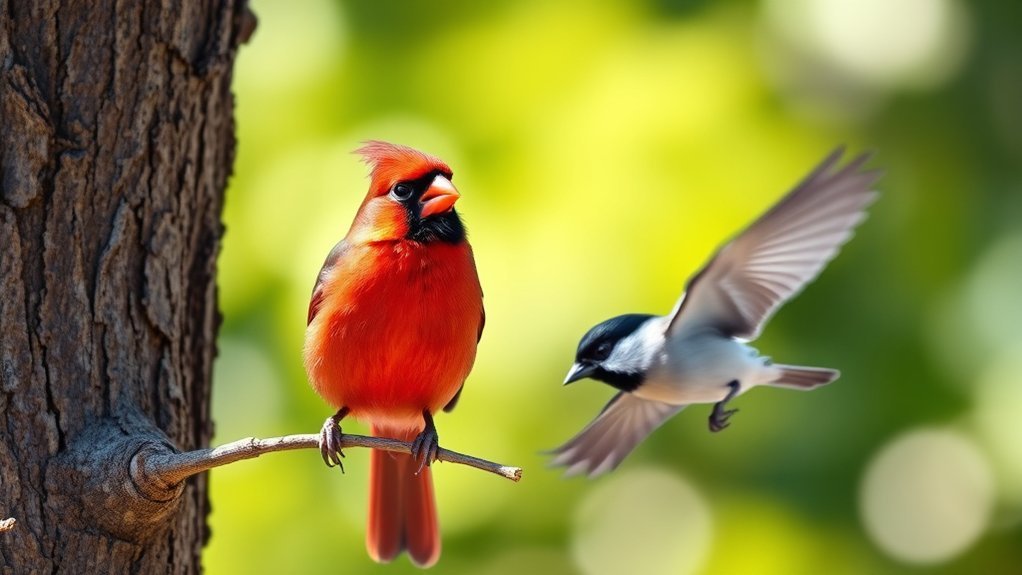
When you see red and black birds, it's helpful to know their color patterns. This can help you identify them better. Red birds often show energy and passion, while black birds can look mysterious and elegant.
Take a look at their colors. Some birds have solid color blocks, and others have interesting patterns or mixes.
Notice how the colors work together. Do they stand out against each other, or do they blend smoothly? These details can tell you more about the bird's kind and behavior.
As you practice spotting colors and patterns, you'll feel more connected to these amazing birds and find joy in being part of the birdwatching community.
Understanding their looks can make your birdwatching experience even better!
Common Red and Black Birds in North America
Once you learn about the colors of birds, you'll notice some common red and black birds in North America. One of these is the Northern Cardinal. This bird has bright red feathers and a cool little crest on its head.
You often see cardinals singing from tree branches or being protective of their space during breeding time.
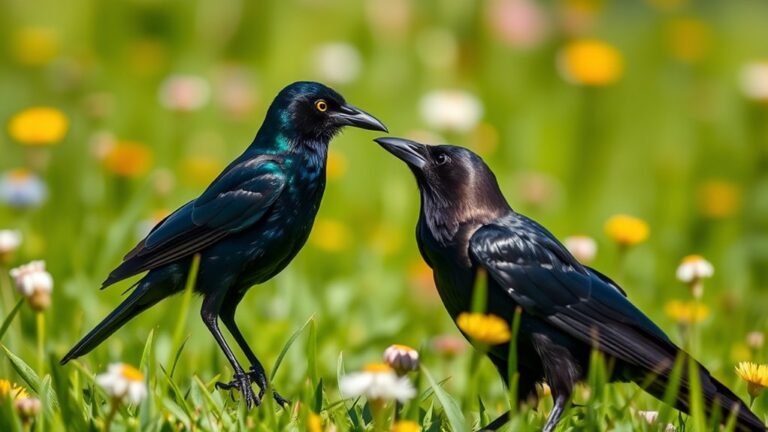
Another popular bird is the red-winged blackbird. It has a shiny black body with bright red and yellow spots on its shoulders.
Both of these birds can be exciting to watch, and their colors help them attract mates and make friends.
Seeing these birds can help you feel more connected to nature. Each time you spot one, it invites you to learn more about birds and the environment around you.
Habitat Preferences and Their Significance
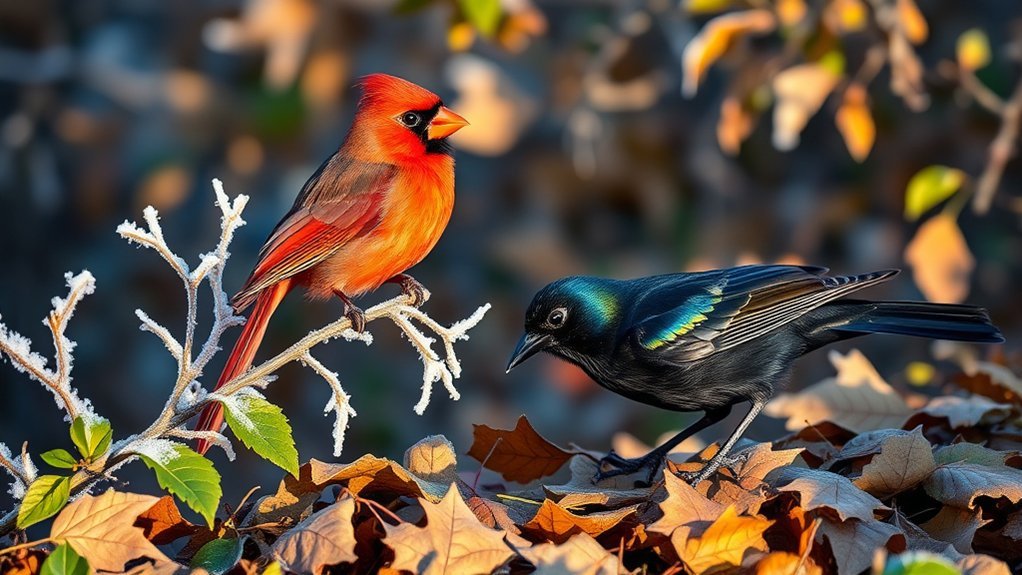
Knowing where red and black birds like to live is important. Their homes affect how they act, eat, and have babies.
These birds can be found in many places like wetlands, forests, and even cities. Each spot gives them different things they need. For example, some birds like to nest in thick woods, while others prefer open fields where they can find food.
When you learn about where these birds live, you also get better at birdwatching. You start to see why they matter in nature. Their presence can show us how healthy an area is.
Red and black birds help by spreading seeds and controlling pests. By understanding where they thrive, you connect more with nature and see the relationships that help everything work together.
Distinguishing Features: Size and Shape
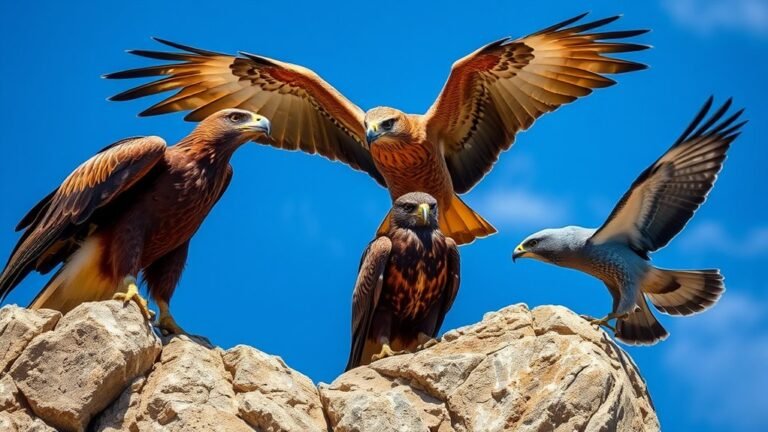
Size and shape are important when you want to spot red and black birds. Start by looking at how big the bird is. Some birds, like the Vermilion Flycatcher, are small, while others, like the Red-shouldered Hawk, are much larger. Noticing these size differences can help you identify them better.
Next, check the shape of the bird's wings. Birds with broad, rounded wings, like the Black-capped Chickadee, look different from birds with pointed wings, like the Downy Woodpecker. These wing shapes can tell you a lot about the bird's flying style.
By focusing on size and shape, you'll get better at spotting different bird species. You'll also enjoy watching birds more because you can appreciate their differences.
This makes birdwatching a fun experience, and you'll feel more connected to nature and fellow bird lovers!
Vocalizations: Songs and Calls
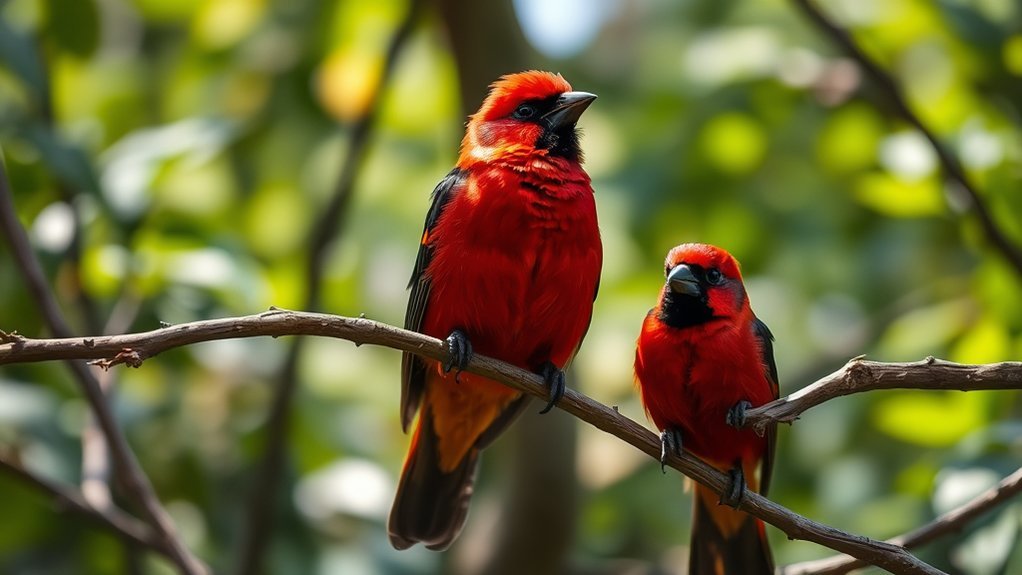
Bird songs and calls help us identify red and black birds. Each type of bird has its own unique sound. For example, the American Robin sings a happy song. In contrast, the Red-winged Blackbird makes sharp, quick sounds.
Listening to bird calls can make watching birds more fun. It connects you with the birds around you. Pay attention to how the sounds change in rhythm, pitch, and tone. These details help you learn about each bird and how they behave.
As you improve your listening skills, you'll enjoy these beautiful creatures even more. You might even make new friends who also love birdwatching. Embrace the fun of discovering these bird sounds!
Seasonal Behavior and Migration Patterns
Birdwatching gets exciting when you think about how red and black birds behave in different seasons and how they migrate.
These birds follow specific paths when they travel from their summer homes to warmer areas for the winter.
During the breeding season, male birds show off their bright colors to attract females.
They also build nests in various places, where some choose trees or bushes while others prefer open fields or even man-made structures.
As winter comes, many birds migrate south. They look for food and warmer weather.
Watching these changes can help you learn more about their lives. It shows how they adapt and survive seasonal changes.
Birdwatching can be a fun and rewarding hobby!
Tips for Successful Birdwatching
To get ready for watching red and black birds, use the right tools and skills.
Following these simple tips can help you enjoy birdwatching more:
1. Get Good Binoculars: A nice pair of binoculars lets you see birds far away much clearer. Also, grab a lightweight field guide. It will help you quickly spot different bird types.
2. Be Quiet and Still: Stay calm and don't move around too much. Loud noises or quick movements can scare birds away.
Try to listen for bird calls and songs. These sounds can help you find where the birds are.
3. Explore Different Places: Check out various spots, like lakes or forests.
Each area can have different red and black birds. By visiting different habitats, you increase your chances of seeing more kinds of birds.
Enjoy your birdwatching adventures!
Resources for Bird Identification and Observation
To improve your bird identification and observation skills, use different resources. Start with field guides. These books have pictures and descriptions to help you spot red and black birds. Make sure to choose guides that focus on your area for the best results.
Next, try birdwatching apps. These apps let you identify birds right from your phone using its camera. Many also help you learn bird songs with sound recordings.
Join local birdwatching groups, either online or in person. Talking to other bird lovers can help you learn and share experiences.
Frequently Asked Questions
Do Red and Black Birds Have Any Unique Mating Behaviors?
Many red and black birds have special ways of attracting mates. They often show off with interesting dances and colorful displays to get attention. During breeding season, these birds use sounds and visual signals to show they are interested or ready to mate. Sometimes, they may act a bit aggressive to impress their potential partners. These behaviors help them find the right match and start a family. Watching these birds during this time can be really fun and exciting!
How Can I Attract Red and Black Birds to My Backyard?
To bring red and black birds to your backyard, you can do a few simple things. First, set up bird feeders with seeds that these birds enjoy, like sunflower seeds or millet. Make sure to fill them regularly, so the birds keep coming back.
Next, plant some native shrubs and trees. These plants create a comfy place for birds to nest and find food. Look for bushes with berries, as birds love snacking on them.
Also, keep your yard tidy, but leave a little area wild. This offers natural spots for birds to feel safe. If you provide food, shelter, and a little wilderness, you will have more chances to see these lovely birds in your backyard. Enjoy watching them!
Are Red and Black Birds Territorial?
Yes, many red and black birds are territorial. They protect their space, especially when they are nesting. These birds work hard to keep their area safe so they can find food and attract mates. This helps their young birds grow up healthy. You might see this behavior if you watch them closely!
What Should I Do if I Find an Injured Red or Black Bird?
If you find an injured bird, like a red or black one, gently catch it with a towel. This will help keep it calm. Next, reach out to a local bird rescue or a vet right away. They will know how to help the bird get the right care and healing it needs. Remember, acting quickly is important!
Do Certain Red and Black Birds Compete for the Same Food Sources?
Yes, some red and black birds do compete for the same food. This often happens in places where they live close together. When food is scarce, these birds can become aggressive as they try to get enough to eat. It's a natural part of their behavior when resources are limited.

Luna is the passionate founder and author of Birds and You, a website dedicated to sharing her love for birds with fellow enthusiasts. Through her engaging articles and guides, she aims to educate and inspire others to explore the fascinating world of birds. When she’s not writing, you can find Luna observing birds in their natural habitats or sharing beautiful bird photography on Pinterest. Join her on this journey to celebrate and protect our feathered friends!