Identifying Female Swans: Key Characteristics
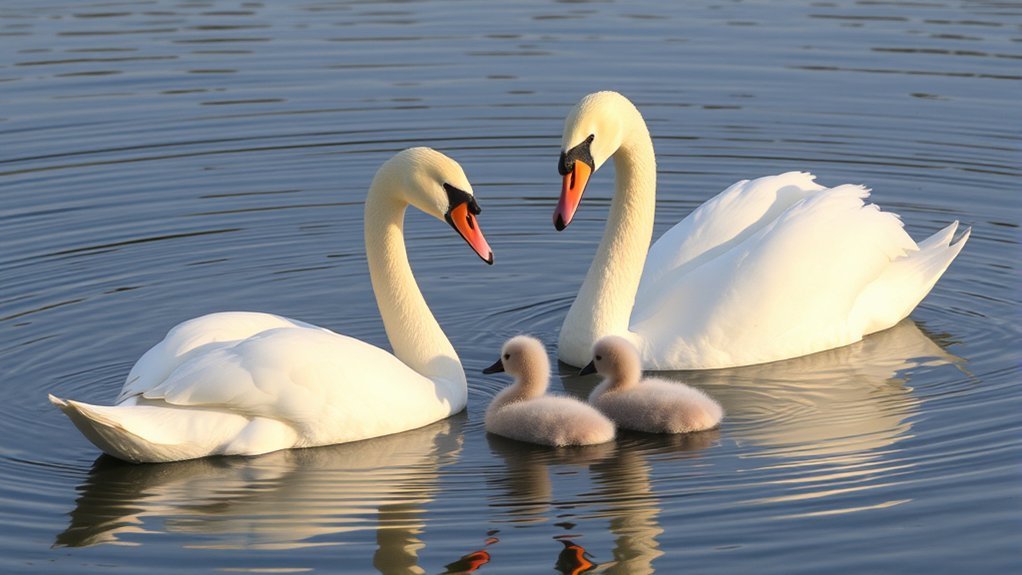
When you see swans, look closely to spot the differences between the females, called pens, and the males, known as cobs. Pens are usually smaller and lighter than cobs, with softer feathers. You can also tell them apart by their bill colors.
But there's more to learn! Watch how they act when they are nesting. Pens may behave differently than cobs during this time. Don't forget to listen to their sounds, too. Each type of swan has its own call.
What other cool things can you find out about these beautiful birds?
A Quick Overview
Female swans, also called pens, are usually smaller than male swans, known as cobs. Pens are about 10 to 30 percent smaller. They have softer feathers and gentle colors, making them look very graceful.
Pens have subtle bills that often have a little pink color. In contrast, the males have bright orange bills. When swans communicate, female swans make soft honks when they are mating. They can also make louder sounds to warn others of danger.
Female swans are great mothers. They build their nests in quiet places and sit on their eggs to keep them warm for 35 to 40 days. Swans love their families and work hard to take care of them.
Size Differences Between Male and Female Swans

When you watch swans, you might notice that the males and females are different sizes. Male swans are called cobs, and they're usually bigger than female swans, which are called pens.
Cobs can be about 10 to 30 percent larger in both length and weight. A male swan usually weighs between 15 to 30 pounds. In contrast, a female swan typically weighs around 10 to 20 pounds. This size difference can really change how they look when they swim in the water.
Next time you visit a lake or pond, take a moment to look closely at the swans. By paying attention to their sizes, you can easily tell the males from the females.
Enjoy watching these beautiful birds!
Coloration and Markings of Female Swans
Both male and female swans are mostly white, but you can spot a female swan, known as a pen, by looking closely at their colors and patterns.
Female swans have softer feather designs and gentle shading, especially around their necks and heads. This makes them look more graceful compared to the bright white of male swans.
Also, check out their bills. Female swans usually have a more subtle bill with a hint of pink, while male swans have bright orange or vibrant bills.
When you notice these details, you can truly appreciate the beauty of female swans in their natural homes.
Vocalizations: How Female Swans Communicate

Swans talk to each other using different sounds, and each sound has its own job in their social lives.
Female swans have special calls that can mean various things. For example, during mating season, you might hear soft honks or trumpets as they attract mates and strengthen their bonds.
When they sense danger, female swans make louder, sharper sounds to warn their friends. This shows how much they care about protecting their group.
If you pay attention to their sounds, you can learn a lot about how they interact and feel. Watching and listening to these beautiful birds can help you appreciate them even more and feel a closer connection to them.
Behavior and Nesting Habits of Female Swans
When watching female swans, you'll see how strongly they care for their young. These beautiful birds are devoted mothers. They find quiet spots near water to build their nests, keeping them safe and protected.
You can watch as they gather twigs, reeds, and soft feathers to make a warm and comfy home for their eggs.
The females take great care during the 35 to 40 days that they sit on the eggs. They turn the eggs often to make sure they stay warm.
When the baby swans, called cygnets, finally hatch, the mother leads them to the water. She stays close to them, guiding them and keeping them safe. This caring behavior helps the young swans feel loved and part of their family.
The Role of Female Swans in Their Ecosystem

Female swans are important for keeping their homes healthy. These graceful birds help by eating plants in the water. By grazing on these plants, they stop them from growing too much. This helps the water stay clear and fresh.
When you see female swans, you'll often spot them building nests. Their nests invite other animals to join their home, showing they provide a good place for many species.
Female swans also take care of their babies. They guard them from any dangers, like other swans that might want to hurt them. By protecting their young, they help more of their kind survive.
Frequently Asked Questions
How Long Do Female Swans Typically Live?
Female swans usually live between 10 and 20 years. Their lifespan can change based on things like the environment, their health, and where they live. These factors can really affect how long they stay healthy and happy in the wild.
Do Female Swans Migrate Alone or With Their Mates?
Female swans usually migrate with their mates. They stick together because this helps them stay safe and support each other. Traveling as a pair is important for their relationship and for taking care of their babies. When you see them moving together, it shows their strong bond and teamwork.
What Do Female Swans Eat Compared to Males?
Female and male swans usually eat the same foods. They both like aquatic plants, algae, and small insects. However, female swans might prefer different foods when they are nesting. This helps them get the nutrients they need during that time.
How Can I Tell the Age of a Female Swan?
You can tell how old a female swan is by looking at her feathers and size. Young swans have softer and brighter feathers, while older swans have worn-out feathers and are usually bigger. Just by observing these features, you can get a good idea of their age!
Are Female Swans More Aggressive Than Males?
Female swans can be more aggressive than male swans, especially when they are protecting their nests during breeding season. They have a strong instinct to guard their eggs, which makes them defensive. This means that if you get too close to their area, they might hiss or flap their wings to scare you away. So, while male swans are protective too, female swans often show more aggression in this role.

Luna is the passionate founder and author of Birds and You, a website dedicated to sharing her love for birds with fellow enthusiasts. Through her engaging articles and guides, she aims to educate and inspire others to explore the fascinating world of birds. When she’s not writing, you can find Luna observing birds in their natural habitats or sharing beautiful bird photography on Pinterest. Join her on this journey to celebrate and protect our feathered friends!