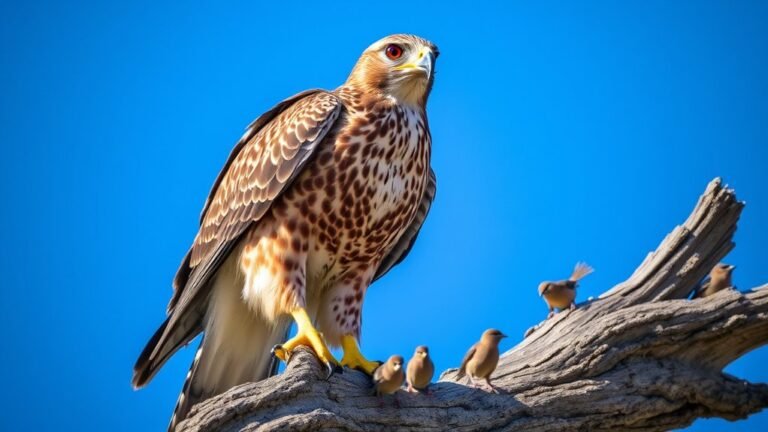

The Allure of Black, Red, and White Birds: Identification Guide
As you watch the colorful black, red, and white birds around you, you start to see how important they are to nature. Each kind you spot has a special story, like the bright cardinal or the friendly black-capped chickadee. Their colors are not just pretty; they help them talk to each other too.
Knowing more about these birds can help you feel closer to nature. You might even find out some cool things about how they behave. What interesting actions will you see next?
A Quick Overview
Black, red, and white birds are colorful and eye-catching. Their bright colors help them talk to each other, attract mates, and defend their territory. It's fun to watch them!
Some interesting birds to know are the cheerful cardinal, the friendly black-capped chickadee, and the stunning red-winged blackbird. Each of these birds has its own special features.
The American robin is easy to spot with its orange-red belly and happy song. In spring, its song tells us that warmer weather is coming, which brings joy to birdwatchers.
The red-breasted nuthatch is special because it climbs down trees headfirst. The white-crowned sparrow is known for its pretty songs during migration.
Watching these birds can help us appreciate nature. It encourages us to be mindful and inspired to protect our feathered friends. Birdwatching is a fun way to connect with the outdoors!
Overview of Black, Red, and White Birds

Explore black, red, and white birds, and you'll find many different species. Each bird has its own special traits and behaviors. The bright colors help them communicate in their habitats. These colors can attract mates and help protect their territory.
To enjoy birdwatching, notice where different birds like to live. Some prefer forests, while others like open fields or wetlands. Look for tips on how birds feed and listen to their calls to help you identify them. For example, the black-capped chickadee loves wooded areas. In contrast, the red-tailed hawk can be seen soaring over grasslands.
Connecting with these birds helps you learn more about nature. You'll find a sense of belonging among other bird lovers. Birdwatching is fun and can deepen your appreciation for the world around you.
The Cardinal: A Bright Red Gem
The cardinal is a bright red bird that stands out all year long. Many people think of them as happy symbols of winter. Their red feathers are eye-catching and show energy and passion. You can find cardinals in many places, like woodlands and backyards. They love dense shrubs and trees, where they can feel safe.
Cardinals are known for their strong territories. Male cardinals work hard to protect their space, singing loudly to show who's in charge. They also like to be social. You often see them foraging in pairs, which helps build a sense of community.
Seeing cardinals in your garden can bring a lot of joy. Their bright colors not only make your space more beautiful but also remind you of nature's wonders.
These remarkable red birds can truly lift your spirits!
The Black-Capped Chickadee: A Charming Companion
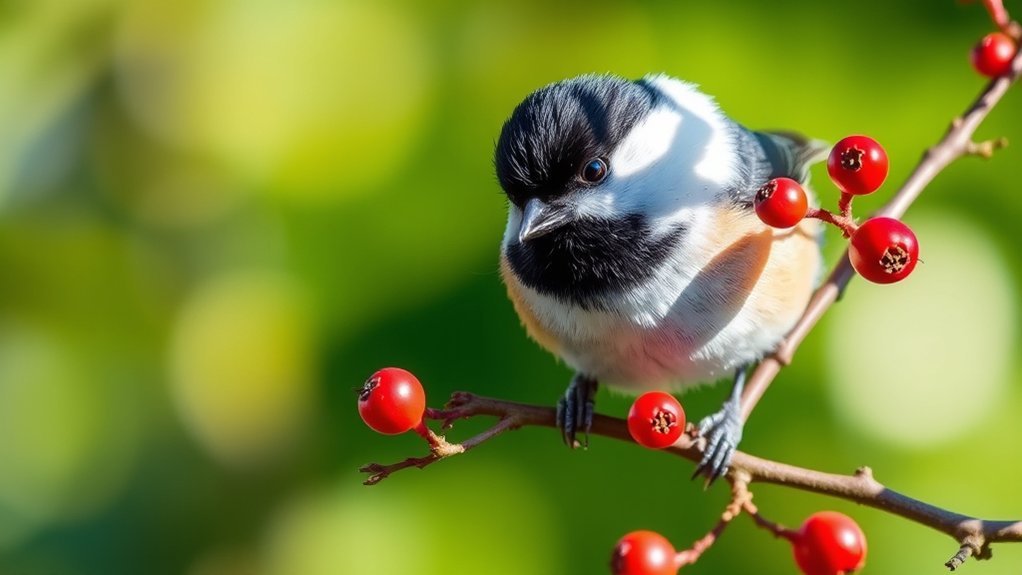
When you step outside, you might hear the happy call of the black-capped chickadee. This little bird with a black cap and white cheeks is fun to watch. It jumps from branch to branch, showing off its playful side.
In winter, you can see chickadees flying together in small groups, chatting with one another. In spring, they get busy looking for places to build their nests. Watching them can bring a smile to your face!
Chickadees are friendly and often share food with each other. They remind us how nice it's to be part of nature.
Spending time with these charming birds can make your outdoor adventures even better!
The Red-Winged Blackbird: A Bold Songster
The red-winged blackbird is a striking bird that stands out with its shiny black feathers and bright red and yellow shoulder patches. You can often find this bird sitting on tall reeds, keeping watch over its area.
It sings a unique song that carries across the marshes. This song helps other blackbirds feel connected. The male red-winged blackbird is very brave. It protects its territory by singing loudly and showing off its colors.
Whether you're new to birdwatching or an expert, the red-winged blackbird is hard to miss. Its bold looks and strong presence make it a favorite among bird lovers.
Enjoy watching and listening to this amazing bird!
The Downy Woodpecker: A Tiny Marvel
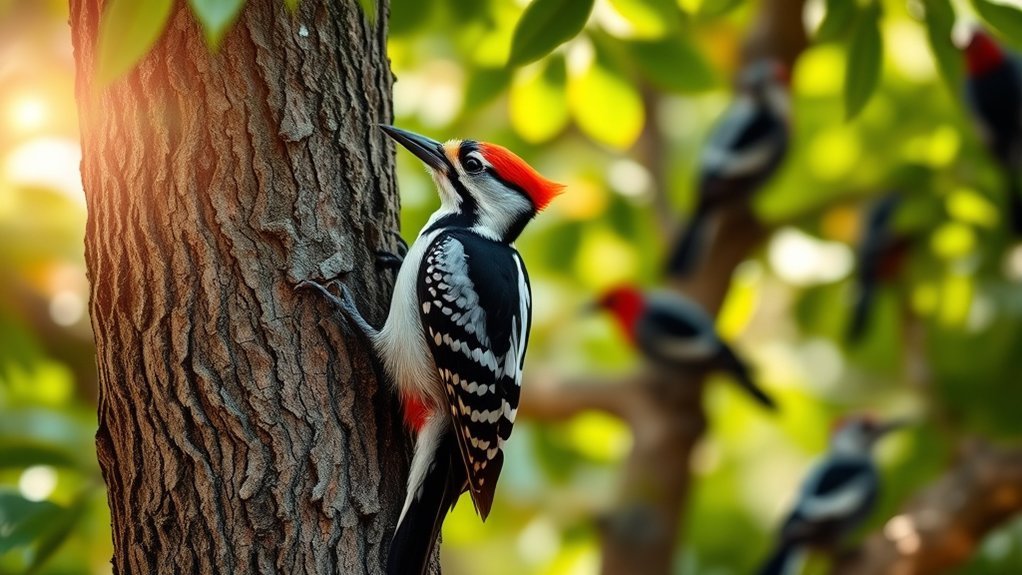
The downy woodpecker is a small, friendly bird that many people love to watch. It has a pretty black and white coat of feathers. You can find it in forests, parks, and backyards, where there are lots of trees.
This bird likes to climb up trees. It pecks at the bark to find insects hiding underneath. You may hear its tapping sound as it works. It's a signal that the woodpecker is nearby.
If you look closely, you can see the difference between male and female downy woodpeckers. Males have a tiny red spot on their heads.
The downy woodpecker adds joy to nature. Watching it helps you feel connected to the outdoors and all the life around you. Enjoy spotting this charming little bird!
The Rose-Breasted Grosbeak: A Stunning Contrast
The Rose-Breasted Grosbeak is a beautiful bird that gets noticed easily. It has bold black and white feathers with a bright pink patch on its chest. This bird likes many places to live, such as leafy forests and bushy areas. You can often find it in gardens and parks where there's plenty of food.
Watching a rose-breasted grosbeak is really enjoyable. These colorful birds sing lovely songs that fill the air. During nesting season, the male birds work hard to protect their space.
They mostly eat seeds, fruits, and insects, which helps keep their environment healthy. By watching and enjoying these birds, you can feel more connected to nature. Birdwatching can be a fun and rewarding experience!
The Common Redpoll: A Winter Delight
The Common Redpoll is a small bird that brightens winter days. Even when it's very cold and snowy, you can find these lively birds hopping around in open areas like fields and shrublands. They love to gather in groups and make cheerful chirping sounds.
- What they eat: Redpolls mainly eat seeds from birch trees and catkins. They show off their skill by hanging onto branches while they snack.
- Winter visitors: Many Redpolls migrate during winter to find food. This makes them a fun sight in your backyard when it's cold outside.
- Social birds: Redpolls are friendly and often hang out together. This makes it more exciting to spot them!
Take a moment to enjoy the lively charm of these birds as they flutter around in the winter landscape.
The Northern Flicker: A Unique Woodpecker
Spotting a Northern Flicker is a fun experience! This woodpecker stands out with its beautiful black and white feathers on a brown body.
Unlike many other woodpeckers, Northern Flickers like to dig for food on the ground. They mainly eat ants and beetles, which shows how they adapt to their surroundings.
Northern Flickers live all over North America, from Alaska to the southern United States. They can be found in forests or open fields.
Watching these birds can teach us a lot about wildlife. Engaging with Northern Flickers helps us appreciate the variety of nature.
The Black-Shouldered Kite: A Graceful Hunter
The Black-Shouldered Kite is easy to recognize. Its black shoulders stand out against its white body. This bird is a great hunter. You can often see it flying over open grasslands or wetlands, looking for food.
The Kite has a special way of hunting. It can hover in the air, looking down at the ground. This helps it spot mice and other small animals. It mainly eats rodents, which helps keep nature balanced.
With a wingspan of about three feet, watching it glide through the sky is truly amazing.
Whether you're a bird lover or just curious, the Black-Shouldered Kite is a fascinating bird to observe!
The American Robin: A Familiar Sight
The American Robin is a bird many people recognize. It has a bright orange-red breast and sings a happy song. In North America, it's a sign that spring has arrived. You can often see these birds hopping around on lawns looking for food like earthworms, insects, and berries.
In spring and summer, robins eat lots of worms because they need protein. When fall and winter come, they switch to eating fruit instead.
Robins are migratory birds, which means they travel a long way. They leave their warm homes in the southern U.S. and fly back north every spring. This journey connects them to different places and helps them be a common sight in suburban yards and parks.
Watching robins can be a fun experience. Their songs and playful behavior remind us of nature's beauty. It helps us feel closer to the outdoors and appreciate these cheerful birds even more.
The Red-Breasted Nuthatch: A Small Wanderer
The Red-Breasted Nuthatch is a small bird that's easy to miss because of its size.
But this little bird is really interesting! It has a special way of moving and finding food. You can often see it hopping up and down tree trunks, looking for insects and seeds in the bark. It's fun to watch as it climbs headfirst down trees, which is different from most birds!
- You can find them mostly in coniferous forests.
- They sometimes move to warmer places during winter.
- They make a loud, nasal sound that's easy to recognize.
Whether you see one in your backyard or on a walk in nature, the Red-Breasted Nuthatch shows us how rich and lively nature can be.
This little bird invites us to notice and enjoy the outdoors.
The White-Crowned Sparrow: A Striking Visitor
The White-Crowned Sparrow is a beautiful bird that many people love to see. This small bird has a striking black and white crown on its head, making it easy to recognize. You can often find it in shrubby areas like brushlands and forest edges. It moves between the northern U.S. to breed and travels south in the winter.
These sparrows have fun behaviors too. You might see them searching for food on the ground, often with other birds. Their cheerful songs fill the air and make you want to pause and enjoy their presence.
Watching these sparrows helps you feel connected to nature, and many people treasure this experience.
Frequently Asked Questions
What Habitats Do Black, Red, and White Birds Prefer?
Black, red, and white birds like to live in different types of places. They can be found in forests, wetlands, and grasslands. Each bird finds food and shelter in these areas that fit their needs.
In forests, these birds can find lots of trees and plants. They use the cover to hide from danger and look for insects or seeds to eat. Wetlands offer water and plants, which gives them a chance to find fish, insects, and seeds. Grasslands provide open spaces where they can hunt for bugs or find seeds on the ground.
These birds are great at adapting to their homes. They change how they find food and where they build nests based on their surroundings. So, whether they are in a lush forest or wide-open grassland, black, red, and white birds make the most of their habitats.
How Can I Attract These Birds to My Backyard?
If you want to attract black, red, and white birds to your backyard, start by putting up bird feeders. Fill them with seeds that these birds like. You can also plant native shrubs and flowers. These plants will make your yard look nice and give the birds a good place to visit. Together, bird feeders and plants will make your backyard a cozy spot for birds to come and enjoy.
What Do These Birds Typically Eat?
These birds like to eat a variety of foods. They enjoy seeds, fruits, and insects. You can attract them to your backyard by providing different types of food. Try putting out sunflower seeds or berries. This will make your space more inviting for them, and you can enjoy watching them feast.
Are There Any Conservation Concerns for These Species?
Yes, there are important conservation concerns for these species. Their survival is at risk because they lose their homes. Urban development and farming take away their natural habitats. This makes it harder for them to find food and survive. Keeping these species safe is crucial for their population stability.
How Do Breeding Behaviors Differ Among These Birds?
Birds have different ways of breeding that are really interesting. Each species has its own courtship rituals. Some birds perform special dances or make unique calls to attract a mate.
When it comes to building nests, the ways they do it also vary a lot. Different birds use different materials, like twigs, grass, or mud, to make their homes. They also choose different places to nest, like trees, bushes, or even on the ground.
This shows how well they adapt to their environments. Each bird finds what works best for them in their habitat. It's fascinating to see how these behaviors help them survive and thrive.

Luna is the passionate founder and author of Birds and You, a website dedicated to sharing her love for birds with fellow enthusiasts. Through her engaging articles and guides, she aims to educate and inspire others to explore the fascinating world of birds. When she’s not writing, you can find Luna observing birds in their natural habitats or sharing beautiful bird photography on Pinterest. Join her on this journey to celebrate and protect our feathered friends!