

Baby Swans: Facts and Characteristics
Baby swans, also known as cygnets, are adorable little creatures. They have fluffy gray or pale yellow feathers that look quite different from their adult swan parents. Cygnets have small, round bodies that make them look charmingly clumsy.
When you see them swimming with their parents, you can learn a lot about their lives. Swans have strong family bonds and work together to keep their young safe. Every day is a new challenge for cygnets as they grow and learn. Watching them can help you understand how they develop and eventually become stunning adult swans.
These little swans are not just cute; they also have an important journey ahead of them!
A Quick Overview
Baby swans, called cygnets, are very cute! They are soft and fuzzy, and they can be gray or light yellow. This is quite different from adult swans, which have bright white feathers.
Cygnets hatch from eggs after about 35 days. When they come out, they need their parents for warmth and safety. The mom and dad swans help them stay safe from danger.
As cygnets grow, they learn to swim and find food. They explore their home with their parents by their side. They like to play and have fun, which helps them make friends with their siblings.
Mom and dad swans work hard to protect their cygnets. They watch out for predators and other dangers. This keeps the little swans safe as they grow up.
Appearance and Physical Features of Cygnets
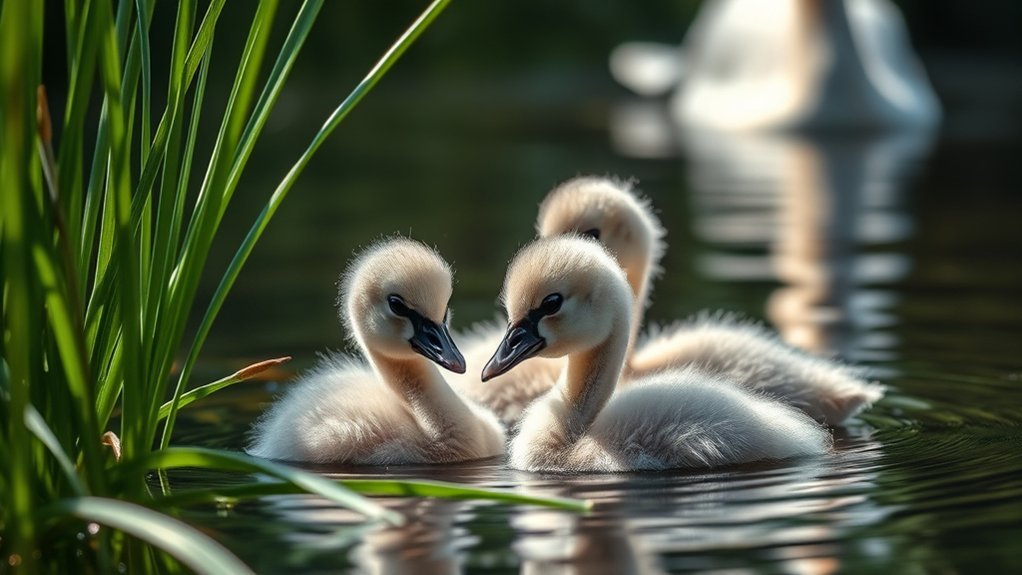
When you first see cygnets, you'll notice their soft, fuzzy feathers.
They've a special color that makes them different from adult swans. Cygnet colors can be gray or pale yellow. This is very different from the bright white of grown-up swans. Their first feathers help them hide from danger and show they're young.
Cygnet bodies have big heads and small, round shapes. This gives them a cute look. Their legs are short, so they move around in a funny but charming way as they learn how to swim.
These features help them stay safe and grow strong. Watching cygnets can help you feel connected to these amazing birds.
The Lifecycle of a Swan: From Egg to Adulthood

The swan's life starts when it lays eggs. The parents take care of these eggs for about 35 days. They keep the eggs warm, showing their teamwork and love.
When the eggs hatch, baby swans, called cygnets, come out. They're covered in soft, fluffy feathers. Right away, they look for warmth and safety from mom and dad.
As the cygnets grow, they start to learn important skills. They practice swimming and finding food.
After six months, the young swans begin to change. They start to get their beautiful adult feathers, changing from cygnets to juvenile swans. This change helps them prepare for life on their own and to blend into groups with other adult swans.
Each step in their life shows how they grow and develop.
Behavior and Social Structure of Baby Swans
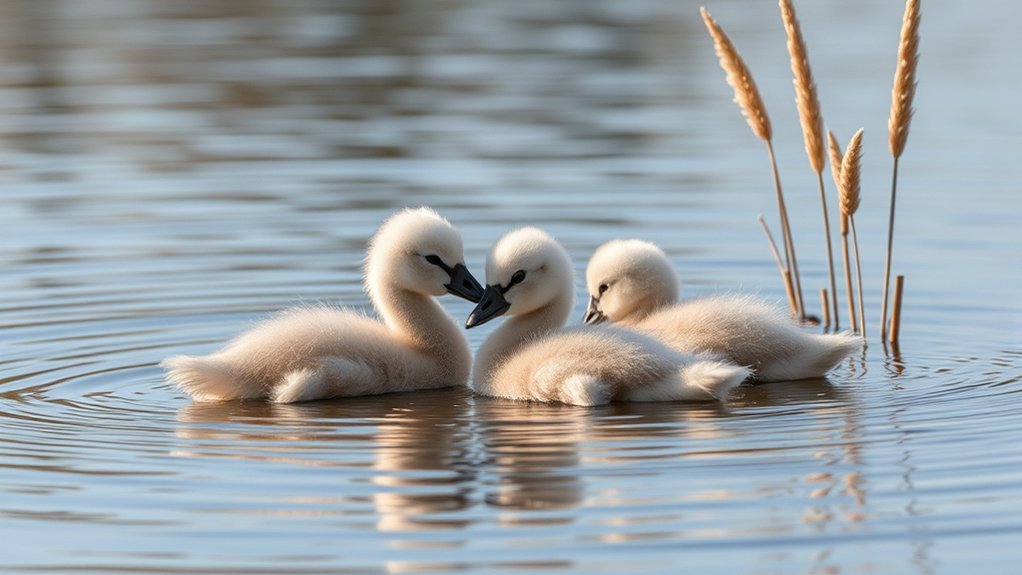
Baby swans, called cygnets, are cute and curious little birds. Right from the start, they rely on their parents.
These tiny swans quickly learn how to play and talk to each other. When they chirp and swim around, they're building important friendships that will help them later in life.
Cygnets do something interesting with their brothers and sisters. They like to compete for food and attention, but they also work together. This fun mix of play helps them feel like part of their family and teaches them how to act with others.
Watching them interact shows us how important community is for their growth and learning.
Every time they play or talk, they learn something new. All these little moments help cygnets become strong and social birds. It's amazing how even small actions can shape their future.
Parental Care: How Swans Protect Their Young
Swan parents play a big part in keeping their cygnets safe as they grow. While young swans, called cygnets, learn to be on their own, their parents are always there to protect them.
Swan moms and dads use their strong bodies to block any danger. This helps keep predators away.
The swan parents stay close by, guiding their little ones through shallow waters where it's easy for threats to hide. You can often hear them making soft sounds to talk to their cygnets. These gentle calls help keep the babies calm and feeling safe.
By watching over their young ones, swans create a safe space. This allows the cygnets to explore and learn important skills they'll need to grow up.
The dedication of swan parents is really important for the health and happiness of their young. So, the next time you see swans, remember how hard they work to keep their cygnets safe!
Feeding Habits of Cygnets
As cygnets grow, their eating habits change a lot to help them develop. At first, they eat nutrient-rich food like small bugs and soft plants from the water.
As they get older, they start to eat more kinds of food. They include algae and grass, which they find in shallow water.
Cygnets like to live in places with lots of plants. These spots give them more food to try, helping them grow strong and healthy.
Swans show their young where to find the best food. This helps cygnets learn to look for good places to eat.
As they explore, cygnets learn how to take care of themselves. They become more independent and learn to fit into their surroundings.
Understanding how cygnets eat helps us appreciate these wonderful birds even more.
The Importance of Habitat for Baby Swans
Baby swans, called cygnets, need the right homes to stay safe and healthy. Their habitats give them food, shelter, and protection from animals that might want to harm them. Wetlands are great places for cygnets because they've lots of fresh plants and bugs to eat.
When these homes are taken care of, baby swans grow strong and help the swan population stay healthy.
On the other hand, if we lose these habitats, it can hurt the local swan numbers. That's why it's important to help protect wetlands.
When you support these efforts, you're helping not just cygnets but also other birds and animals that share the same environment. By taking care of nature, we all benefit and feel more connected to the world around us.
Challenges and Threats Faced by Cygnets
Cygnets, or baby swans, look lovely and calm. But they face many problems as they grow. One big issue is predators. Birds and some animals often see cygnets as easy snacks.
Their homes are getting smaller because of things like cities and pollution. This makes it harder for cygnets to find safe places to live. Weather can also be rough. Strong storms or heat can make finding food and shelter tough for them.
Humans can also cause trouble. Activities like boating and fishing can disturb where cygnets live and grow. They can also get sick easily since they often stick close together.
It's important to know these challenges to help protect cygnets. By understanding what they go through, we can help them grow up safely and happily.
Fun Facts About Baby Swans
Baby swans, also called cygnets, have some cool features that make them fun to learn about. First, their fluffy feathers start off gray and turn white as they grow up. This change is special and shows how they grow. Swans are symbols of beauty and purity too!
Cygnets have soft, lovely sounds that help them talk to each other and stay close to their family. This is super important for staying safe.
They're also great at finding food, diving underwater easily to catch little plants or bugs.
Swans are very caring parents. They keep a close eye on their cygnets to protect them from any danger. This shows how much they care about family.
All these traits make baby swans fascinating and help them fit into nature. They're a big part of the world around them and remind us how important every creature is.
The Transition to Adulthood: Growing Up Swan
As baby swans, called cygnets, grow up, they go through big changes that help them become adults. One big change is when they lose their soft, fluffy feathers. These feathers are replaced with shiny adult feathers. This process starts when they're about six months old and can take a few months.
While their feathers change, cygnets also learn how to fit in with other swans. They start to form friendships and figure out who's in charge. This helps them later when they find a mate or join a group.
As they grow, they also learn to communicate better with other swans. They practice their sounds and show who they are.
All these changes not only help cygnets grow physically but also teach them how to interact with others and live in their environment. It's an exciting journey to adulthood for these beautiful birds!
Frequently Asked Questions
How Long Do Cygnets Stay With Their Parents?
Cygnet development depends a lot on their parents. They usually stay with their parents for about six months. During this time, the cygnets learn important skills for survival and how to socialize. Their parents watch over them closely, helping them grow and become strong swans.
What Are Common Predators of Baby Swans?
Baby swans, also called cygnets, face dangers in the wild. Common predators like raccoons and foxes hunt them. They can sneak up to the nests and disturb the families.
Besides predators, other threats make life hard for cygnets. Pollution in water can harm their homes. When people build near lakes and ponds, it takes away safe places for swans to live. These problems can lead to more baby swans not surviving.
Protecting baby swans means keeping their homes clean and safe. By caring for their environment, we help ensure more cygnets grow up healthy and strong.
Can Cygnets Swim Immediately After Hatching?
Cygnet swimming starts right after they hatch. When they come out of their eggs, they show natural paddling movements. These little swans are born ready for the water. Their bodies are made for swimming, which helps them stay safe in lakes and ponds. It's amazing to see how quickly they take to the water!
What Colors Are Cygnets When They Are Born?
When you see cygnets, you'll notice they are born with soft gray or yellowish feathers. These baby swans start off looking cute and fluffy. As they grow older, their colors change, and they often become darker. Birdwatchers enjoy observing these changes in the cygnets' colors as they mature. Watching their transformation can be a fun experience!
Do Baby Swans Make Sounds or Communicate?
Yes, baby swans, called cygnets, make sounds. They use soft whistles and grunts to talk to each other. These sounds help them bond with their family. When you watch them, you can see how they connect and act together. It's fun to learn about their family life!

Luna is the passionate founder and author of Birds and You, a website dedicated to sharing her love for birds with fellow enthusiasts. Through her engaging articles and guides, she aims to educate and inspire others to explore the fascinating world of birds. When she’s not writing, you can find Luna observing birds in their natural habitats or sharing beautiful bird photography on Pinterest. Join her on this journey to celebrate and protect our feathered friends!


