
Can Peacocks Actually Fly?
When you see a peacock, you might think its big, colorful feathers make it hard for them to fly. But that's not quite right! Peacocks can actually fly. They have strong wings and muscles that help them take off quickly. They can fly short distances, but they usually don't fly far.
Peacocks use their flying ability to stay safe from predators and to find food. Their strong wings let them swoop up into trees, where they can hide from danger. So, while they don't fly like an eagle, they can still take off and soar for a little while. Isn't that cool?
A Quick Overview
Peacocks can fly, but not very far. They can manage short flights even though they are big and heavy. A peacock can jump up to 6 feet high and fly about 200 to 300 feet in one go.
Their strong wing muscles help them take off quickly, especially when they need to escape from danger. However, their heavy feathers make it hard for them to fly long distances, so they usually only take short flights.
Flying helps peacocks survive. They can find food and show off to attract mates by flying. So, even if they aren't great fliers, their ability to fly a little helps them a lot in life!
The Anatomy of a Peacock
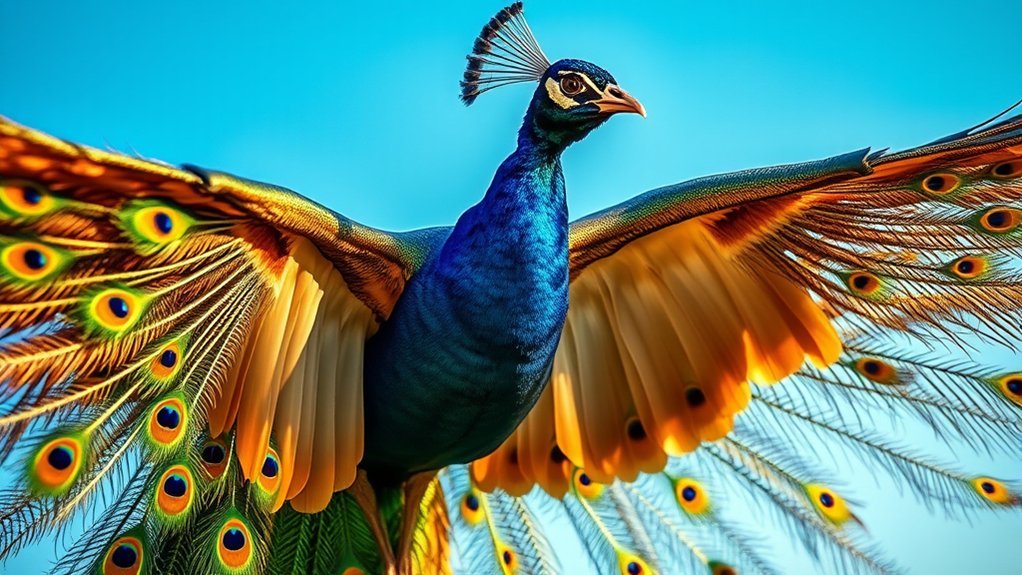
When you look at a peacock, you see a bird with a special body that helps it live well. One of the most exciting parts of a peacock is its feathers. The long tail feathers, called a train, can grow more than five feet long. These feathers have beautiful colors and patterns. They help the peacock attract other birds and can even protect it from danger by being so big.
Inside, the peacock has strong muscles. These muscles help it carry its heavy feathers and move quickly. Its bones are shaped just right to keep everything balanced. This balance lets the peacock walk proudly and move easily in its home.
Learning about a peacock's body helps us understand why it's so amazing. These birds are really interesting and have lots to show us with their unique looks and skills!
The Flight Capabilities of Peafowl
Peafowl, especially peacocks, can fly even though they're big and heavy. Their wings help them make short flights.
They aren't good at flying for a long time, but they can jump high—up to 6 feet! They can also fly around 200 to 300 feet in one leap. Their strong wing muscles help them lift off quickly to escape from danger or to find a safe spot to rest.
Their beautiful feathers are heavy, which makes it hard for them to fly for too long.
Learning about how peafowl can fly shows us how nature helps animals survive in their homes. It's fascinating to see how peafowl, with their dazzling colors and unique flying skills, have managed to adapt to their surroundings.
Reasons for Peacock Flight

Peacocks can fly for many good reasons. Their colorful feathers and strong wings help them survive in the wild.
First, flying helps peacocks escape from predators. When they see a threat, they can quickly take off and find a tree to hide in.
Second, they can use short flights to move around and look for food. Sometimes they need to jump to higher ground to stay safe.
Flying also plays a big role in mating. Male peacocks fly up to show off their beautiful feathers to attract females.
These flying skills keep peacocks safe and help them find food. They're important for peacocks' survival in nature.
Behaviors and Habitats of Wild Peacocks
Wild peacocks are interesting birds that show how well they can adapt to different places. They do many things to survive and socialize. For example, during courtship, male peacocks display their beautiful feathers to attract female mates.
They like to sleep in trees to stay safe from predators on the ground. This shows that they prefer living in forests.
Peacocks also make loud sounds to warn their friends about danger. When they look for food, they eat seeds, fruits, and insects, which means they enjoy a mixed diet.
Learning about wild peacock behavior helps us appreciate these amazing animals and understand their role in nature.
Differences Between Male and Female Peacocks
Peacocks are interesting birds. Male and female peacocks look very different from each other, and these differences help them play unique roles in their lives.
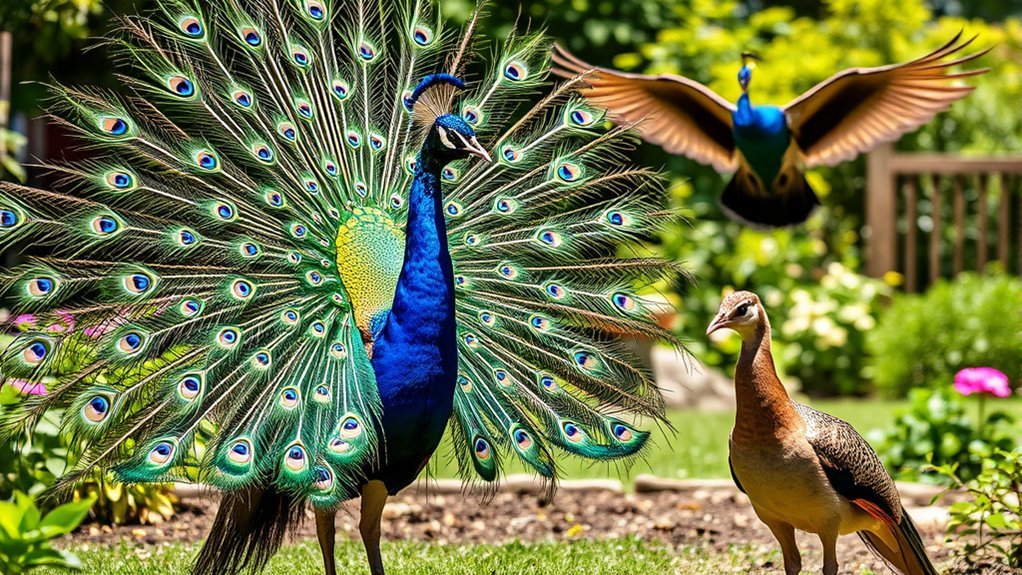
Male peacocks are famous for their beautiful feathers. They've bright, shiny colors and long tail feathers that they can spread out like a fan. These eye-catching feathers help them attract female peacocks and show other males that they're strong and healthy.
Female peacocks, on the other hand, have feathers that are mostly brown and gray. These colors help them hide in their surroundings, especially when they're sitting on their eggs. By blending in, they stay safe from predators and increase their chances of survival.
The differences in how male and female peacocks look help them in different ways. Males use their bright colors to attract mates and show off, while females use their more muted colors to protect themselves and their babies.
This balance in their roles helps peacocks thrive in the wild.
The Role of Flight in Peacock Mating Rituals
You might think of peacocks as beautiful birds that strut their colorful tails on the ground, but flying is also important for their mating rituals. When male peacocks want to impress females, they take to the air. In flight, they show off their bright feathers against the blue sky.
Flying helps peacocks in a few ways. First, it makes them look bigger and more impressive. This is a great way to catch the attention of female peacocks.
Next, flying shows off their skill and strength. Males that can fly well may seem more attractive because they can escape from rivals and predators.
When a peacock lands high up on a branch, it sends a message. It shows that the bird is strong and can survive in the wild.
Predators and Threats in the Wild
Peacocks are beautiful birds with bright feathers, but they face many dangers in the wild.
These stunning feathers can make it hard for them to hide from predators.
Here are three main threats to peacocks:
- Big Cats: Animals like leopards and tigers hunt peacocks for food. They're strong and fast, making them a big threat.
- Birds of Prey: Eagles and hawks can swoop down quickly to catch peacocks that aren't paying attention.
- Snakes: Some snakes can sneak up on young peacocks on the ground. This makes it very dangerous for them when they're growing.
When their homes are destroyed, it becomes even harder for peacocks to find places to hide.
Knowing about these dangers helps us understand how peacocks fight to survive every day.
Urban Adaptations of Peacocks
Peacocks are amazing birds that can live in cities. They've found cool ways to stay safe and thrive among all the hustle and bustle. In parks and gardens, you can often see them looking for food. They're smart and know how to avoid people while they search for snacks.
These colorful birds like open spaces. They spread their beautiful feathers to show off, even when surrounded by buildings. Peacocks also use fences and trees for shelter, which shows how clever they are.
The Myth of Flightless Peacocks
Many people think that peacocks can't fly because we see them a lot in cities. But that's not true! Let's clear up some misunderstandings:
- They Are Big, But They Can Fly: Peacocks weigh between 8 to 13 pounds. Even though they're heavy, they can fly short distances.
- They Like to Perch in Trees: Peacocks often sit on tree branches to stay safe from danger. This shows that they can fly well enough to get up there.
- Getting Away from Danger: In the wild, peacocks often fly a little when they need to escape from predators. So, they aren't flightless!
Next time you see a peacock, remember they can fly, even if it's hard to notice in the city!
Peacocks are truly amazing birds that are fun to learn about.
Conservation Efforts for Peafowl
Peafowl are amazing birds, but they face many problems because their homes are shrinking. To help protect them, people are working hard on conservation. This means taking care of their natural habitats so more peafowl can live and grow.
One big way to help is through habitat preservation. Many groups are busy restoring areas where peafowl can thrive. You can help by joining local conservation groups or donating to wildlife foundations. Every little bit counts!
Another important effort is breeding programs. These programs help increase the number of peafowl and make sure their families stay strong.
Zoos and wildlife reserves often work together to create safe breeding conditions.
By getting involved, you help peafowl survive. Plus, you connect more with nature. Supporting these efforts can make you feel like part of the global wildlife community.
Let's work together to keep peafowl and our world thriving!
Observing Peacocks in Their Natural Setting
Watching peacocks in their natural homes is a fun way to learn about these beautiful birds. Here are some things to notice while you watch:
- How They Get Along: Check out how peacocks play and show off their colorful feathers. They do this to attract friends or show that they're in charge.
- Where They Live: Look at the places where you find peacocks. Do they like thick trees or open fields? Understanding where they choose to stay helps us know how they survive.
- What They Eat: Pay attention to how peacocks search for food. Watch what they eat and how they find it. This shows us their role in nature.
Enjoy your time observing peacocks! Their behavior and choices teach us a lot about these amazing birds.
Frequently Asked Questions
Do Peacocks Prefer to Fly at Night or During the Day?
Peacocks like to be active during the day. They show off their pretty feathers and look for mates when the sun is out. Although peacocks can move around at night, they usually prefer to rest safely instead of flying in the dark.
Can Peacocks Swim or Dive Underwater?
Peacocks can swim! They use their long tail feathers to help them stay balanced while they are in the water. But peacocks don't dive deep like some other birds. They like to stay in shallow water and are careful when they swim. So, while they can paddle around, they won't go underwater for long.
What Do Peacocks Eat to Maintain Their Flying Ability?
Peacocks need a good diet to fly well. They eat different foods to stay strong and healthy. Their meals include seeds, fruits, and insects. These foods give them the vitamins and energy they need for flying. By eating a mix of these things, peacocks keep their wings strong and their bodies agile. A balanced diet helps them soar gracefully in the sky!
Are There Different Species of Peacocks With Varying Flight Abilities?
Yes, there are different kinds of peacocks, and they can fly in various ways. Some can only fly short distances to get away from danger. Other types can fly even less. Learning about these flying abilities helps us understand how peacocks adapt to their lives. It also shows us interesting facts about their behavior in nature.
How Far Can a Peacock Fly in One Go?
A peacock can fly about 200 to 300 feet at a time. They use strong legs to jump high into the air, which helps them escape from animals that might want to catch them. Their ability to fly shows off their strength and skill. It's pretty cool to see how far they can go!

Luna is the passionate founder and author of Birds and You, a website dedicated to sharing her love for birds with fellow enthusiasts. Through her engaging articles and guides, she aims to educate and inspire others to explore the fascinating world of birds. When she’s not writing, you can find Luna observing birds in their natural habitats or sharing beautiful bird photography on Pinterest. Join her on this journey to celebrate and protect our feathered friends!