
Do Doves Mate for Life? Insights Into Their Relationships
Do Doves Mate for Life? Let's Find Out!
Do doves really mate for life? To answer this question, we need to look at how they act and relate to each other. Doves show their love through fun dances and by taking care of their babies together. This shows they have a strong bond.
But what about their surroundings? Do things like weather or food affect their relationships? Also, are all dove species the same when it comes to love? Knowing these facts can help us understand how they survive and thrive in nature.
Let's dive in and learn more about these lovely birds!
A Quick Overview
Doves are often thought to mate for life. This belief comes from how strong their bonds are with each other. They show their love with activities like cooing and moving together in sync.
Many types of doves stay with the same partner for multiple breeding seasons. But sometimes, they might find new mates. Changes in the environment, like losing their homes or climate issues, can make these relationships tough.
Both mom and dad doves help take care of their babies. They work together to feed and protect them, showing how much they care about their family.
The Symbolism of Doves in Culture

Doves are beautiful birds that many people admire. They often represent peace and love in different cultures.
Doves are seen as symbols of purity and new beginnings.
In the Bible, there's a famous story about Noah. After a big flood, a dove flew back to Noah with an olive branch. This showed that the water was going away and that life could start again.
Doves are also important at weddings. They symbolize lasting love and loyalty between two people.
When you see doves, you can feel a sense of connection to others.
In art and stories, doves often bring people together. They remind us of the good feelings that come from understanding and belonging.
An Overview of Dove Species
Doves are special birds that people often admire. They've different meanings in many cultures, which makes them interesting to learn about.
There are many types of doves, like the common mourning dove and the colorful Nicobar pigeon. Each dove species lives in its own habitat, showing how well they adapt to different places.
Some doves like to live in cities, while others prefer forests. They display friendly behaviors that attract our attention. A dove known as the rock dove has even learned to live closely with humans, creating a special bond.
Watching how doves interact with each other can remind us about the importance of friendship and community in our own lives. Doves aren't just beautiful to look at; they also help us appreciate the connections we share with others.
Understanding Dove Mating Rituals
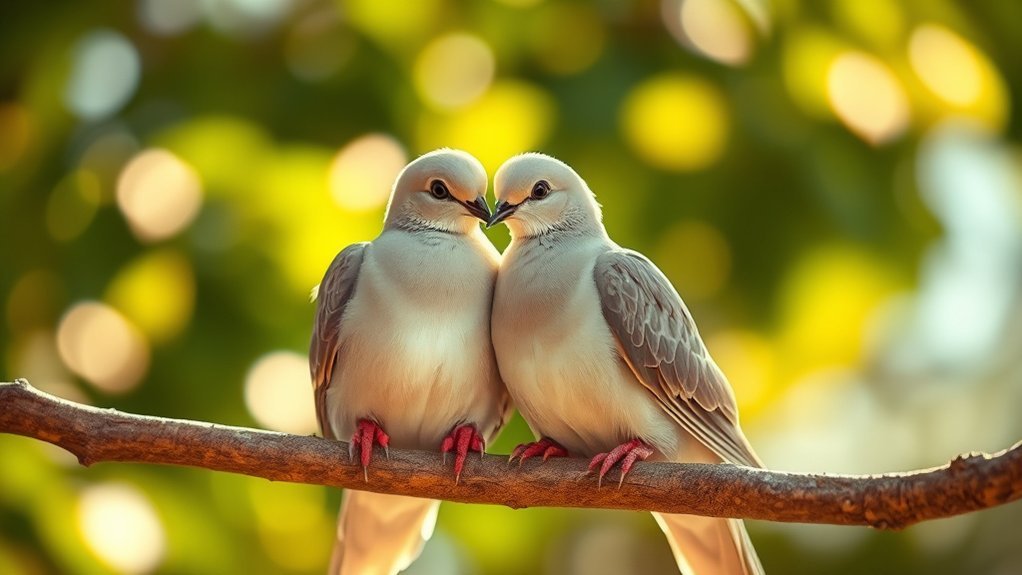
When you watch doves in the wild, their mating rituals are beautiful and easy to see. They start by making soft cooing sounds, which create a warm and inviting feeling.
You'll notice the doves puffing out their chests and bobbing their heads. This action shows that they're attracted to each other and ready to mate.
They also spend time preening each other. This act of cleaning and grooming is a way for them to show love and care.
Their movements often match, creating a special bond that many people find captivating. Watching these doves helps you appreciate how deep their connections go.
These rituals show us how doves express their feelings and build their relationships.
The Formation of Pair Bonds
When you watch doves, you can see how they form strong friendships. This connection is important for keeping their pair stable.
Here are four simple ways doves create these lasting bonds:
- Mutual Preening: Doves clean each other. This helps them trust and care for one another.
- Vocalizations: They make cooing sounds to talk to each other. This helps them feel close.
- Shared Foraging: Doves look for food together. This teamwork builds their friendship.
- Nesting Behavior: They build nests together. This shows they're serious about their relationship.
Through these actions, doves create lasting bonds. They show that they enjoy being together and value their companionship.
The Role of Communication in Dove Relationships

Communication is very important in dove relationships. It helps them connect and bond with each other. Doves often use sounds like coos and soft calls to stay in touch and show they care. These sounds help create a warm feeling of belonging between the birds.
Body language is also key in dove communication. When doves preen each other or sit close together, they show trust and closeness. These actions express feelings that words can't always say.
Nesting and Parenting: A Team Effort
Doves are great at working together as a team when it comes to nesting and caring for their young. They show how much they care for each other and their baby birds.
Here's how they do it:
- Gathering Materials: Both doves go out to find things like twigs and leaves. They want to create a warm and safe place for their nest.
- Building the Nest: Together, they put the materials together. They make a strong home for their eggs and chicks.
- Incubating Eggs: The doves take turns sitting on their eggs to keep them warm. This way, they share the work evenly.
- Feeding the Chicks: Once the baby birds hatch, both parents feed them. They're dedicated to helping their little ones grow strong.
Watching doves work together shows us how important teamwork and caring for each other is in raising a family.
The Importance of Territory in Dove Relationships
Doves care a lot about their territory. When they find a place they like, they'll show it off. Doves do this by cooing, puffing up their chests, and standing tall. These actions help them show they're in charge of their space.
Claiming a territory isn't just about having a spot to sit. It's about keeping their mate and food safe. When a dove secures a territory, it makes both birds feel safe and close. This closeness helps build their friendship.
A clear territory also stops fights with other dove pairs. This is important for living peacefully. Understanding how doves use their space can help us see how it affects their friendships and helps them stay together longer.
Territory shapes their lives in many important ways.
Differences Between Monogamous and Polyandrous Species
In the animal kingdom, animals have different ways of finding mates. Two main types are monogamous and polyandrous species.
Monogamous species stick to one partner. This helps them form strong bonds and share the work of raising their young. On the other hand, polyandrous species have one female that mates with many males. This mixing helps keep their babies healthy and strong.
Here are some simple differences:
- Social Structure: Monogamous species like to pair up. Polyandrous species work as groups.
- Reproductive Strategy: Monogamous couples focus on raising one set of babies. Polyandrous females try to have many babies.
- Parental Investment: In monogamous species, both parents help equally. In polyandrous settings, males might take on different roles in caring for the young.
- Genetic Variation: Polyandry brings together different genes. This helps the species adapt if their environment changes.
Factors Influencing Dove Pair Bonds
Doves have unique pair bonds, and several things affect how strong these bonds are. One big factor is their environment. In places with lots of food and safe spaces, doves bond better. They can focus on raising their young together.
But if their home changes a lot, like due to bad weather or people moving in, their bond might weaken. This can make their relationships shorter.
Another important point is that if there are predators around, doves pay extra attention to each other. They work together to stay safe.
Do Doves Really Mate for Life?
Doves are known for forming strong bonds, and people often wonder if they mate for life. This idea of always being with one partner is sweet, but dove relationships are a bit more complicated.
Here are some key points to help you understand how doves connect:
- Courtship: Doves have special ways to show they like each other. They do little dances and coo to strengthen their bond.
- Companionship: These birds love spending time together. You can often see them grooming each other, which helps them feel close.
- Nest Building: Doves work as a team to build their nests. This shows they're committed to taking care of their future babies together.
- Fidelity: While many doves stick with one partner, things can change. If one dove goes missing, the other might find a new partner.
Scientific Studies on Dove Relationships
Doves are often seen as symbols of love because they can pair up and stay together for a long time. But, scientists have found that their relationships are a bit more complicated.
Doves choose their mates based on how they act. They usually like partners that have similar social behaviors. This helps them build strong bonds that can last several seasons when they breed.
But sometimes, doves will change partners. They do this when the environment changes or when better mates are available.
Some doves stay with the same partner for a long time, but they can also tell when a new mate might help them have more babies. So, dove relationships show a mix of feelings and smart choices to help them succeed.
In the end, it's important to understand that doves can connect with each other while also making choices that help them thrive.
Observing Doves in the Wild
When you watch doves in nature, you'll see their fun and interesting behaviors. Understanding how they act can help you enjoy their world even more.
Pay attention to these things:
- Courtship Displays: Look at their beautiful movements and listen to their soft cooing sounds as they try to impress each other.
- Foraging Together: Watch pairs of doves find food together. They work as a team, which helps them grow closer.
- Nest Building: Notice how doves build their nests together. This shows how well they work with each other.
- Vigilance: See how one dove keeps an eye out while the other eats. This shows they trust each other.
The Impact of Environmental Changes on Dove Partnerships
When you watch doves in nature, think about how changes in the environment can affect their relationships. Things like cities growing or farms expanding destroy places where doves can build nests.
Climate change also changes the weather, which can make it hard for doves to find food. Food is very important when they're raising their young. If there isn't enough food, doves may have trouble taking care of their babies, which can harm their bonds.
Doves also migrate, or travel, during different seasons. But changing weather can make this harder. They might've to go to new places that are unfamiliar to them.
These challenges can test the strength of their partnerships. It shows us how everything in nature is connected. Each change impacts the lives of these beautiful birds. Watching these interactions helps you see how strong and resilient they can be.
Frequently Asked Questions
What Is the Average Lifespan of a Dove in the Wild?
In the wild, doves usually live for about three to five years. Their lifespan can change based on a few things. If they have a good place to live, enough food, and are safe from predators, they can live longer. These factors play a big role in how well doves do in nature.
How Do Doves Choose Their Mates?
When doves choose their mates, they follow special steps to show they care. They make soft sounds called coos and bow to each other. You can see them picking partners carefully. They build strong bonds that show how much they care and how they feel. It's a sweet and simple way for doves to connect and find their friends.
Can Doves Form Same-Sex Pair Bonds?
Dove behavior is really interesting. Did you know that doves can form same-sex bonds? This means two doves of the same sex can become close companions. These relationships show that doves can feel strong emotions and love each other, just like different-sex pairs.
When you watch these doves together, you can see how they care for each other. They stay close, cuddle, and coo softly. This behavior helps us understand more about how doves live and interact with one another. It's pretty cool to think about the friendships that exist in the dove world!
What Challenges Do Doves Face in Urban Environments?
Doves face many challenges in cities. First, there aren't enough places for them to build their nests. Buildings and roads take up space that used to be natural homes.
Second, doves interact with people more than they do in nature. This can make them feel nervous or frightened. Also, loud noises and pollution make it hard for them to chat with each other. They need to hear calls to find mates and stay close to their friends.
Finally, finding food can be tough in the city. With fewer trees and bushes, doves have to look harder for seeds and crumbs. This can change how they live and socialize, making life more difficult for them.
How Do Predators Affect Dove Pair Relationships?
Predators can really change how doves behave in their pairs. When they sense danger, doves feel stressed. This can make them stick together more to stay safe or sometimes cause them to fly apart when things get tough.
For example, when a hawk flies nearby, doves may huddle closer to protect each other. They might become more watchful and alert. But if they can't find safety together, they might split up, which can be hard for them.

Luna is the passionate founder and author of Birds and You, a website dedicated to sharing her love for birds with fellow enthusiasts. Through her engaging articles and guides, she aims to educate and inspire others to explore the fascinating world of birds. When she’s not writing, you can find Luna observing birds in their natural habitats or sharing beautiful bird photography on Pinterest. Join her on this journey to celebrate and protect our feathered friends!