
Do Ducks Have Teeth? Discover the Facts
When you think about ducks, you might wonder if they have teeth. The answer is no. Ducks don't have teeth like we do. Instead, they have special bills with ridges called lamellae. These ridges act like teeth to help ducks eat.
Ducks use their bills to grab and filter food from water and mud. This helps them find plants, insects, and tiny fish. Their unique bills are key for their survival since they help them get the nutrients they need.
So, next time you see a duck, remember that even though they don't have teeth, they are great at finding food with their special bills!
A Quick Overview
Ducks do not have teeth. Instead of teeth, they have special ridges on their bills that work like tiny teeth to grab food. This helps them catch things like plants and small insects in the water.
Ducks are good at getting food because their bills have a unique shape. They can sip up water and food at the same time while pushing out extra water. This is called suction feeding.
Inside their bills, ducks have little structures called lamellae. These lamellae act like strainers to help them separate food from water.
This special bill helps ducks eat well in different places without needing actual teeth. So, while they may not have teeth like we do, their bills are perfectly made for their diet!
The Anatomy of a Duck's Bill

The bill of a duck is an amazing part of its body that helps it eat and stay alive. Ducks have wide, flat bills that make it easy for them to scoop up food from water and mud. This shape helps them find tiny creatures, seeds, and plants to eat.
Ducks' bills also have many tiny sensors. These sensors can feel vibrations and smell chemicals in the water. This helps ducks find yummy and healthy food.
When we look at how a duck's bill works, we can see how ducks have changed over time to live in different places. Their bill is more than a tool; it shows how good they're at surviving in nature.
Understanding Duck Feeding Habits
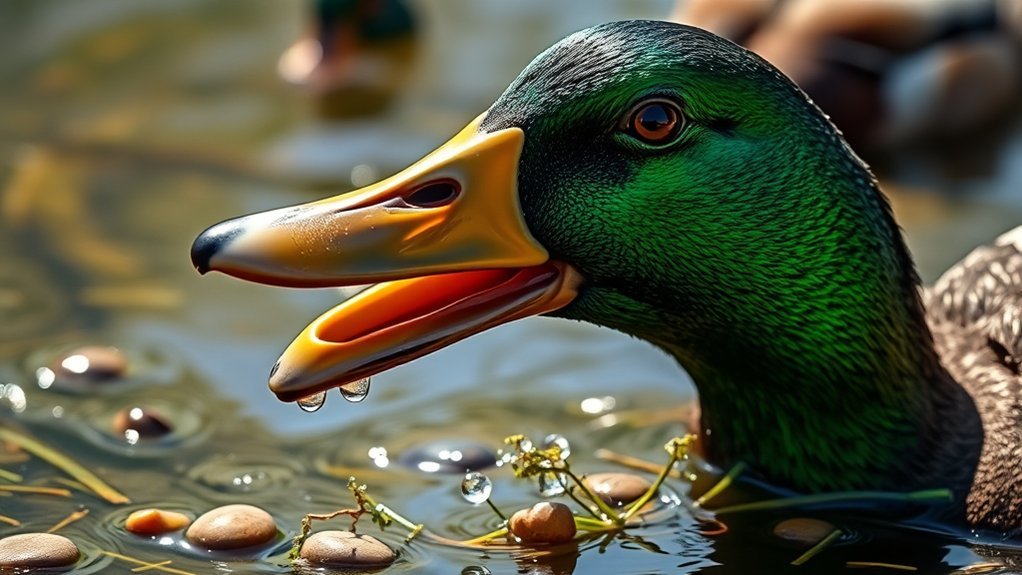
Ducks have different ways of finding food. Their bills help them eat in various environments. Some ducks like to dabble at the water's surface, while others dive deeper to find plants and bugs.
Their special bills allow them to sift through mud and water, so they can get the most food possible.
Ducks also like to eat in groups. When they forage together, they learn from each other and stay safer from predators.
This sharing helps them connect and survive better in the wild. Knowing how ducks eat gives us a better understanding of how they live and get along with each other.
How Ducks Filter Food With Their Beaks

Ducks have special beaks that help them filter food from their surroundings. These beaks are perfect for catching the tasty things they love to eat.
Let's look at how ducks use their beaks:
- Wide, Flat Shape: The shape of their beaks helps them reach plants and tiny bits in the water easily.
- Ridge-like Structures: Ducks' beaks have small ridges that grab onto seeds and insects. These ridges work like tiny teeth.
- Suction Feeding: Ducks can suck in water and food at the same time. This makes it easy for them to get what they want.
- Choosing Food: While ducks eat, they can pick their favorite food and push out the extra water.
These special beak features help ducks find the nutrition they need from different places.
Watching them filter food can be really fun!
The Role of Duck Tongues in Eating
Ducks have special tongues that help them eat. While their beaks are important, the tongue also plays a big role in how they find and grab food.
When ducks look for food, they use their tongues to take in water and any tasty bits around. The water helps soften the food, making it easier to swallow.
Plus, their tongues have little bumps that help them hold onto slippery snacks so those bites don't escape.
This means that a duck's tongue isn't just for show. It helps ducks eat better in their watery homes.
Knowing how their tongues work can help us see how amazing these birds are and how they get their meals.
What Do Ducks Eat? A Diverse Diet
Ducks are interesting birds with a diverse diet. They can eat a variety of foods based on their environment. Ducks adapt well to different places, which helps them find what they need to stay healthy.
Their food choices change with the seasons, so they often look for different kinds of food throughout the year. Here are some common foods ducks enjoy:
- Aquatic plants – Ducks love to munch on plants that grow in the water. These are tasty and healthy for them.
- Insects – In warmer months, insects are everywhere. Ducks eat lots of them to get the protein they need.
- Seeds and grains – Ducks often find seeds and grains in fields and wetlands. These are easy snacks for them.
- Small fish and crustaceans – In some areas, ducks eat small fish and shrimp for extra nutrition.
Sometimes ducks have to compete with each other for food. This can push them to try new foods to survive.
Learning about what ducks eat helps us see how flexible and clever these birds are in finding their meals.
Adaptations for Aquatic Feeding
Ducks have special features that help them find food in the water. Their wide, flat bills are great for catching plants, insects, and tiny fish. Inside these bills are thin, comb-like parts called lamellae. These lamellae act like strainers, making it easy for ducks to filter food from the water.
Ducks also have webbed feet. These help them swim well and reach food more easily. Their necks are flexible, which lets them move around while they look for food. This helps them explore different places in the water.
These cool adaptations show how ducks have changed over time to live in watery homes. They connect a duck's body and the way it eats in the water. Ducks fit perfectly into their environments because of these special traits.
Differences Between Duck and Other Bird Beaks
Duck beaks are different from other bird beaks. These differences help ducks eat in special ways.
Let's look at some key points:
- Shape: Duck beaks are wide and flat. This shape helps them skim water for food. In contrast, birds like eagles have sharp, hooked beaks that are great for tearing meat.
- Length: Ducks have longer beaks. This helps them search for food in mud and water. Many small birds have shorter beaks that are good for cracking seeds.
- Texture: Duck beaks are often soft. This softness helps them filter small food items from water. On the other hand, woodpeckers have tough, pointed beaks for drilling into trees.
- Color: Duck beaks can be bright and colorful. This bright color can show how healthy a duck is. Other birds may have duller beak colors to blend in with their surroundings.
These differences show how ducks and other birds fit into nature and find their food in unique ways.
The Science Behind Duck Bill Shape
The shape of a duck's bill is very important for how they eat and survive. Over millions of years, ducks have changed their bills to fit different places and diets. Their wide, flat bills help them find food easily in water and on land. Ducks can scoop up all sorts of food like plants and tiny water animals.
The way their bills are shaped isn't just for show. It helps them live in specific environments and use the food available where they are.
Baby Ducks: Feeding With Style
Feeding baby ducks, also known as ducklings, is really interesting. Their bills help them eat in fun ways based on how old they are. As ducklings grow, their food needs change, and it's important to know this.
Here are four key tips for feeding ducklings:
- Right Food for Their Age: Baby ducklings need food that's high in protein so they can grow strong. When they get older, they can eat a more varied diet with different foods.
- Clean Water: Ducklings need fresh water to drink and play in. It helps them digest their food and keeps them clean.
- Encourage Foraging: Ducklings like to look for food. You can give them small insects or greens to mimic their natural searching habits. This makes eating more fun and healthy for them.
- Good Nutrition: Make sure their food includes vitamins and minerals. This helps them stay healthy and feel good.
Common Misconceptions About Duck Anatomy
Many people love ducks for their cute quacks and beautiful swimming. However, they often have wrong ideas about duck anatomy. One big myth is that ducks have teeth. In fact, the "teeth" on their bills are just serrated edges. These edges help ducks hold onto their food.
Another common mistake is thinking all ducks only live in water. Many duck species are happy in different places, showing they can adapt well.
People also often overlook how important a duck's feathers are. Feathers keep ducks warm and help them float on water.
How Ducks Adapt to Their Environments
Ducks are amazing animals! They can live in many different places, not just by the water.
Here are four cool ways ducks adapt to their homes:
- Choosing Places to Live: Ducks look for spots with food and safety. They can even live in cities or wetlands if those places have what they need.
- Flying to New Places: When the weather changes, ducks travel long distances to find warmer places to eat and raise their babies. This helps them survive better in different climates.
- Building Safe Nests: Ducks build their nests in places where predators can't easily find them. This helps keep their eggs and baby ducks safe.
- Sticking Together: Ducks like to live in groups. Being part of a flock helps them avoid danger and makes them feel closer to each other.
Fun Facts About Ducks and Their Feeding Mechanisms
Ducks have really cool ways to find food. Their bills are special tools that help them filter out tasty snacks from the water. Ducks use their unique bills to sift through plants, bugs, and tiny fish, making sure they get the nutrition they need.
When ducks are looking for food, they talk to each other. They quack and move their bodies to show where the food is. This helps them stick together and find more food as a group. It's like a team effort! This social behavior helps ducks build strong friendships and find food more easily.
Ducks can dive underwater and dabble on the surface. This ability lets them eat different kinds of food in various places.
Ducks show how feeding and socializing go hand in hand. They know how to work together and enjoy their meals!
Frequently Asked Questions
Do Ducks Bite, and Is It Painful?
Ducks can bite, but their bites are usually not very hard. They use their beaks to pinch. This helps them find food in the water or on land. If a duck is surprised or feels scared, it might pinch you, and that can hurt a little. So, it's good to be careful when you are near ducks. Just keep a safe distance, and you can enjoy watching them without any worry!
Can Ducks Eat Bones or Hard Foods?
Ducks can eat some hard foods, but they mostly prefer softer things. It's important to keep bones away from ducks because bones can be dangerous for them. Knowing what ducks like to eat can help keep them happy and healthy.
How Do Ducks Digest Their Food?
Ducks have a special way to digest their food. They use a part of their stomach called the gizzard. The gizzard works like a strong grinder. It breaks down hard food, like seeds and tough plants.
When ducks eat, they swallow their food as it is. Then, the gizzard crushes everything into smaller pieces. This helps ducks get all the good nutrients from their food. Thanks to their gizzard, ducks can eat a variety of food and stay healthy.
Do Ducks Prefer Certain Types of Food?
Ducks like to eat different kinds of food depending on what is around them. They enjoy munching on plants that grow in the water, tiny bugs, and seeds. By watching ducks, you can see what they like to eat and how they find their food. It's fun to learn about their eating habits!
Are There Other Birds Without Teeth?
Many birds do not have teeth, like ducks, chickens, and ostriches. These birds use their beaks to eat instead of teeth. Each bird has a beak shape that helps it get the food it likes. For example, a duck's beak is great for scooping up water and food from ponds, while a chicken's beak is good for scratching the ground for seeds. This shows how birds have special ways to find their food and stay healthy.

Luna is the passionate founder and author of Birds and You, a website dedicated to sharing her love for birds with fellow enthusiasts. Through her engaging articles and guides, she aims to educate and inspire others to explore the fascinating world of birds. When she’s not writing, you can find Luna observing birds in their natural habitats or sharing beautiful bird photography on Pinterest. Join her on this journey to celebrate and protect our feathered friends!