
Exploring Orange Birds: Identification Tips
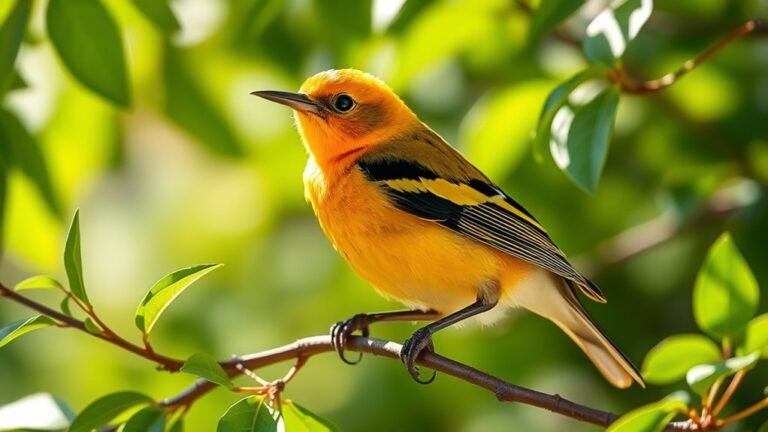
When you look for orange birds, their bright colors and patterns are fun to see. The Baltimore Oriole has shiny orange feathers, while the Orchard Oriole has softer colors and patterns. Each bird has its own special traits that help you tell them apart.
Using binoculars can help you see them better. Watch how they act and listen to their songs. If you want to attract these birds to your yard, think about what you can do to make your space inviting. Here are some easy ideas:
- Plant Trees and Shrubs: Orange birds like places where they can hide and find food. Planting trees and bushes will help.
- Put Out Food: Offer a variety of bird feeders with seeds and fruits, like oranges or jelly.
- Create Water Sources: Birds need water to drink and bathe. Add a birdbath to your yard.
- Avoid Pesticides: Keep your yard chemical-free to protect birds and their food sources.
With these simple steps, you can enjoy watching beautiful orange birds in your backyard!
A Quick Overview
- To find orange birds, look in open fields, near fruit trees, and along riverbanks where they like to eat and make nests.
- Listen closely to their unique calls and songs. This can help you know which orange bird you are seeing.
- Use binoculars that have 8x or 10x magnification. This lets you see their bright colors and patterns better.
- Watch how they feed. Some orange birds move really well to find nectar, fruits, or insects.
- Keep track of their migration patterns. Many orange birds travel long distances between their summer and winter homes.
Now get ready to enjoy some birdwatching!
Overview of Orange Birds
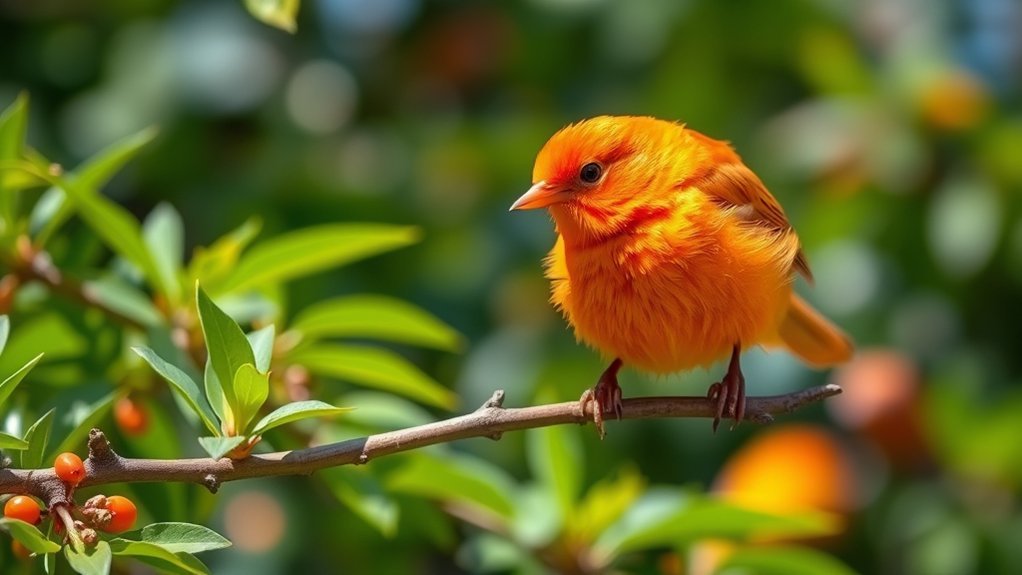
Orange birds are easy to spot because of their bright colors. Birds like the American Robin and the Baltimore Oriole are good examples of this. Their vivid feathers help attract mates and keep predators away.
These birds usually live in places like riverbanks and open woods where they can find lots of food, especially fruits and insects. Many orange birds also travel long distances between their summer nesting spots and warmer winter homes.
When we learn about where these birds live and how they migrate, we can appreciate them more. It also helps us feel connected to nature and join in birdwatching communities.
Enjoy watching these beautiful orange birds!
Common Characteristics of Orange Birds
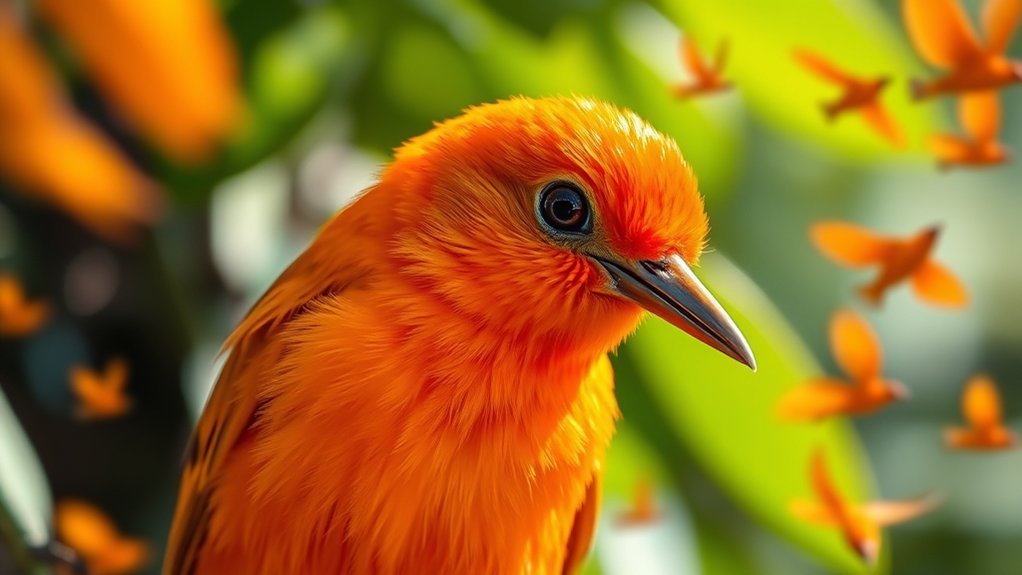
Orange birds have some cool features that set them apart from other birds. First, their bright feathers catch your eye. They can range from lively tangerine to gentle peach colors. These bright shades help them attract mates and show off their territory.
When they want to find a partner, many orange birds perform fun courtship dances or build nests. These actions help them bond with their mates.
Orange birds also like specific places to live, which affects what they eat and how they socialize. Learning about these traits makes appreciating the beauty of orange birds even more enjoyable!
The Baltimore Oriole: A Backyard Favorite
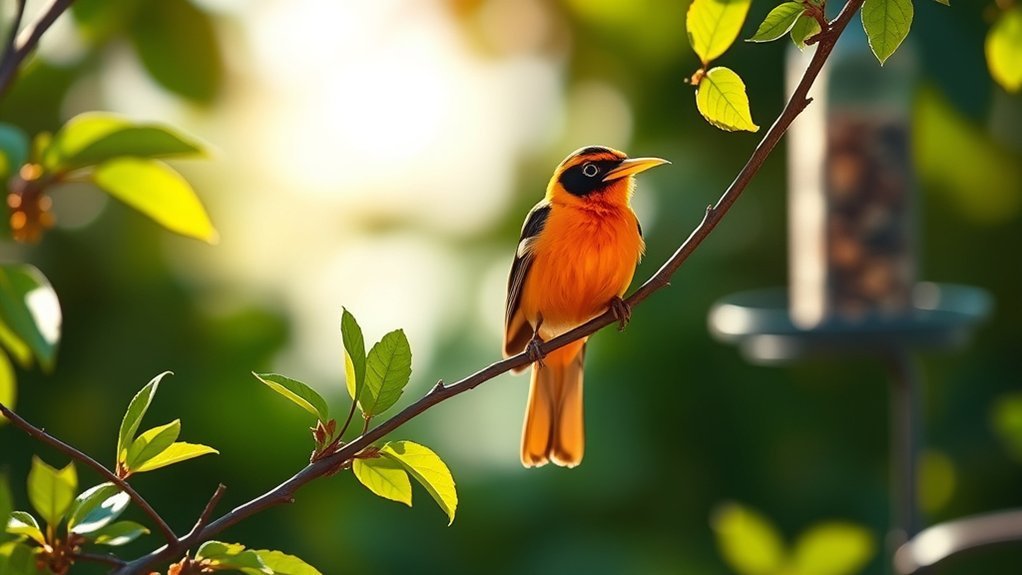
The Baltimore Oriole is a colorful bird that shines bright in backyards. Picture its beautiful orange and black feathers.
These birds have some interesting habits. They often hang upside down while looking for food in the branches. You might see them zipping from tree to tree, searching for tasty treats.
Baltimore Orioles enjoy a diet of nectar, fruits, and insects. To attract them to your yard, try putting out jelly or orange slices.
Watching these birds eat and sing is a delightful experience.
To make your backyard a friendly place for them, plant some native trees and bushes that they like.
With a little patience, you can turn your yard into a lively spot filled with Baltimore Orioles.
The Orchard Oriole: A Smaller Orange Relative
If you enjoy watching Baltimore Orioles, you'll love the Orchard Oriole. This bird is smaller but just as colorful. Here are some fun facts about the Orchard Oriole that you might enjoy.
- Size: The male Orchard Oriole has bright orange-yellow feathers. It's about 7 to 8 inches long.
- Behavior: These birds are shy. They often move quickly between branches to find food.
- Diet: Orchard Orioles eat insects, fruits, and nectar. They help keep the ecosystem healthy.
- Habitat: You can find them in open woods and urban gardens. They like to build their nests hanging from tree branches.
By keeping an eye out, you can see the charming ways Orchard Orioles behave and learn about their important role in nature.
Happy birdwatching!
The Scarlet Tanager: A Long-Distance Migrant
The Scarlet Tanager is a beautiful bird that catches people's eyes. These bright red and black birds make long trips every year. In spring and summer, they breed in North America.
When fall comes, they fly all the way to Central and South America for the winter.
Scarlet Tanagers love living in woodlands. They like tall trees and lots of leaves to hide in. When they migrate, you can see them flying in groups. They look for food and take breaks along the way.
Their songs are lovely and echo through the trees. If you listen closely, you might hear their sweet melodies as they travel.
These wonderful birds show us how amazing nature can be!
The Western Tanager: Vibrant Yellow and Orange
When you see a Western Tanager, you can't miss its bright yellow body and vibrant orange head. This bird makes the outdoors even more beautiful, whether it's in thick woods or open areas.
During the breeding season, males sing loudly. They do this to protect their space and attract female tanagers.
Here are some features to help you spot a Western Tanager:
- It has bright yellow feathers and an orange crown.
- Its wings are dark with two white stripes.
- It has a short, thick beak, perfect for catching insects.
- Its golden throat shines beautifully in the sunlight.
With its colorful look and lively actions, the Western Tanager brings joy to birdwatching!
The Bullock's Oriole: A Blend of Colors
The Bullock's Oriole is a beautiful bird that shines with bright orange feathers and bold black wings and head. You can often find this bird in open woods and near water, where it likes to live in places like gardens and riversides.
When they look for food, Bullock's Orioles show off their cool skills by moving gracefully through trees. They eat fruits, nectar, and insects, carefully taking their meals from leaves.
Their lovely songs add to the joy of their colorful presence in nature. Watching these orioles helps us feel connected to the outdoors and appreciate all the amazing birds out there.
The Flame-colored Tanager: A Rare Treat
The Flame-colored Tanager is a beautiful bird. It's known for its bright orange and yellow feathers. This bird lives mainly in the cloud forests of Central America. People love to watch it because of its stunning colors.
Here are some fun facts about the Flame-colored Tanager:
- It likes to eat fruits and insects.
- When it looks for food, it moves in a fun and acrobatic way.
- Outside of breeding season, it lives in small, friendly groups.
- It sings sweet melodies in the morning.
Watching this bird can help you appreciate nature's beauty.
The Rose-breasted Grosbeak: A Colorful Companion
The Rose-breasted Grosbeak is a colorful bird that many people admire. It has a shiny black back and a bright pinkish-red front. You can usually find it in places with lots of trees and open spaces, like deciduous woodlands.
Males of this species sing beautiful songs to get attention from females and to mark their territory.
Watching them is fun because they often eat insects, seeds, and fruits. Their cheerful nature makes them a joy for bird watchers, who enjoy seeing such lively birds in nature.
The Rose-breasted Grosbeak adds beauty and excitement to the birdwatching experience.
The Eurasian Bullfinch: An Intriguing Visitor
The Eurasian Bullfinch is a colorful bird often found in woodlands. It has round bodies and bright orange bellies, making it easy to spot as it looks for food among the trees.
- Sounds: Bullfinches make a soft, pleasant call that you might hear before you see them.
- Food: They mainly eat seeds from fruit trees and bushes.
- Groups: These birds usually fly in small, friendly groups. They help each other find food and stay safe.
- Nests: Bullfinches build their nests in thick bushes, which keeps their babies safe from danger.
Watching these lovely birds can help you enjoy and appreciate nature even more.
Tips for Spotting Orange Birds in the Wild
Want to see orange birds in the wild? Here are some simple tips to help you spot them!
First, get good birdwatching gear. Use binoculars with 8x to 10x magnification. This will help you see the birds better.
Next, learn about local birds and their migration times. Birds like the American Robin and Baltimore Oriole fly around at certain times of the year. Knowing when they're active can help you find them.
Look for places where orange birds like to hang out. Open fields, fruit trees, and wetlands are great spots.
Pay attention to the sounds around you. Listen for their special calls. You can also watch for bright orange colors against the green trees and grass.
The best time to go birdwatching is early in the morning or late in the afternoon. Birds are usually more active then.
Using these tips, you can enjoy nature more and have fun spotting orange birds!
Happy birdwatching!
Attracting Orange Birds to Your Backyard
If you want to attract orange birds to your backyard, make it a nice place for them. Here are some easy steps to follow:
- Plant native flowers: Put in flowers like milkweed and trumpet vine. These plants bring in bugs, and bugs are great food for the birds.
- Set up bird feeders: Fill your feeders with sunflower seeds, suet, or orange slices. These treats will attract the colorful birds.
- Add water sources: Place a shallow birdbath or a water dish in your yard. Birds need water to drink and to splash around in!
- Make comfortable spaces: Let some bushes or trees grow thick. This gives the birds a safe place to hide and build nests.
By doing these things, you'll create a friendly spot for orange birds to visit!
Enjoy watching them in your yard.
Conservation Efforts for Orange Bird Species
Orange bird species need our help. Their homes are in danger because of climate change and habitat loss. We can all do something to help them survive.
One way to help is by supporting groups that protect and restore their habitats. These organizations work hard to keep ecosystems safe for orange birds. You can also join local groups that focus on bringing these birds back to health. They often have projects that need volunteers.
It's important to pay attention to laws that protect wildlife. When you speak up for stronger protections, you can make a big difference.
Getting involved in citizen science projects is another great way to help. These projects let you track orange bird populations and share your findings with scientists.
Frequently Asked Questions
What Habitats Do Orange Birds Prefer for Nesting?
Orange birds like to nest in different habitats. They enjoy lush forests, wetlands, and open grasslands. These places give them plenty of food and shelter. This helps them raise their young comfortably. When they have what they need, they can thrive and build strong nests.
Are Orange Birds Migratory or Sedentary Species?
Most orange birds move around with the seasons. Some of them fly to warmer places when it gets cold. Learning about how these birds migrate can help you understand their habits. It also lets you feel closer to nature. Watching their journeys can be exciting and remind us how animals adapt to their surroundings.
What Diets Do Orange Birds Typically Have?
Orange birds eat a variety of foods, but they really love fruits! They enjoy sweet and ripe berries, citrus fruits, and other tasty fruits. Eating these fruits helps spread seeds, which is important for plants to grow. This way, orange birds play a big part in nature!
How Can I Differentiate Between Male and Female Orange Birds?
To tell the difference between male and female orange birds, look closely. Males usually have bright orange feathers. They stand out and are often more colorful than females. Females, on the other hand, tend to be smaller and not as bright. You can spot a female by her duller orange color. These features can help you identify each sex when you see them in nature.
What Are Common Predators of Orange Birds?
Orange birds face several predators. Hawks and falcons are two of the biggest threats. They have sharp eyes and fly really fast to catch their food.
Snakes can also be dangerous to orange birds. They move quietly and can strike quickly when they get a chance.
Mammals, like cats, can hunt orange birds too. Cats are sneaky and good at stalking their prey.
These predators make life tough for orange birds, who must be careful and aware of their surroundings.

Luna is the passionate founder and author of Birds and You, a website dedicated to sharing her love for birds with fellow enthusiasts. Through her engaging articles and guides, she aims to educate and inspire others to explore the fascinating world of birds. When she’s not writing, you can find Luna observing birds in their natural habitats or sharing beautiful bird photography on Pinterest. Join her on this journey to celebrate and protect our feathered friends!