What Do You Call a Group of Ducks?
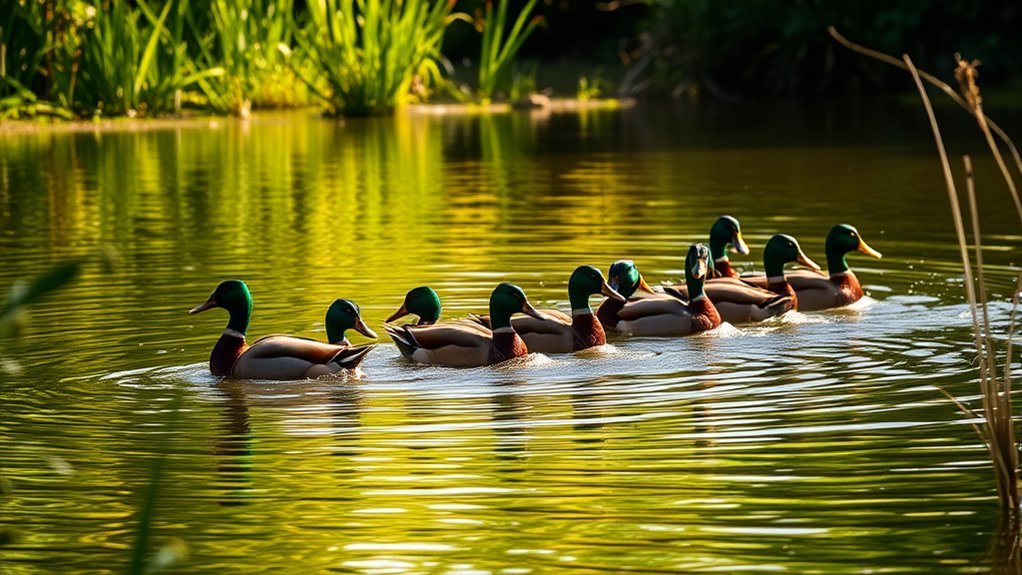
When you see a group of ducks, they have fun names based on what they are doing. If they are swimming, you can call them a "paddle." When they fly together, they are called a "skein." These names show how ducks like to be social with each other.
Want to know more about these interesting birds? Ducks have a lot of cool behaviors that make them special. So, every time you spot them, remember their unique names and enjoy watching them!
A Quick Overview
What Do You Call a Group of Ducks?
Have you ever seen ducks together? They can be quite fun to watch! When ducks are swimming together on water, we call them a "paddling" or a "raft." It's like they're having a little boat party!
When ducks fly together, they form a "skein." They look amazing flying in the sky, don't they?
There are also some silly names for ducks hanging out together. You might hear people say "waddle," "plump," or "dopping." These names show how ducks love to be in groups and hang out with each other.
The names for duck groups come from hunting. They describe how ducks act and how they socialize. Ducks are friendly creatures, and they like to stick together!
The Common Terms for Groups of Ducks
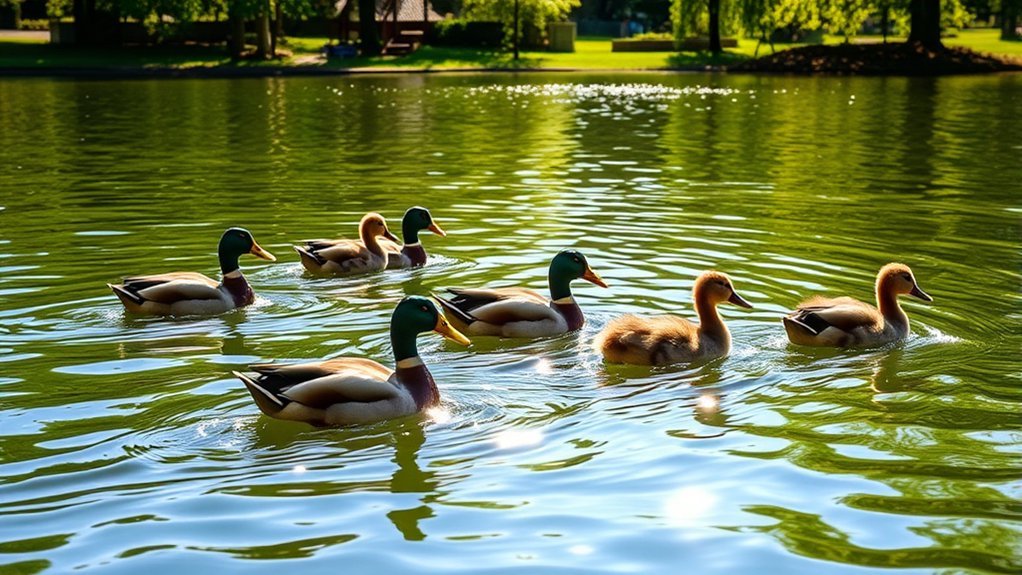
When you see a group of ducks, you might wonder what to call them. If they're on the water, we often say they're a "paddling" or a "raft." This shows how they float together with grace.
When ducks are flying, you might hear a lot of "quacks." Their movement in the air can be called a "skein." This term describes how they travel together during migration.
Seeing ducks in a group makes you feel a sense of belonging. It reminds us how important it's to be together, just like ducks in nature.
Each name for a group of ducks helps us appreciate the beauty of community in the animal world.
The Origin of Duck Collective Nouns
Did you know that the names we use for groups of ducks are pretty interesting? These names have fun histories. A long time ago, people liked to hunt ducks, and that's when these special names started. They wanted words that showed how ducks act when they're together.
When you hear a name for a group of ducks, like a "flock" or a "raft," it tells you about how they stick together and help each other. This idea of community is important.
Fun and Quirky Names for Duck Gatherings
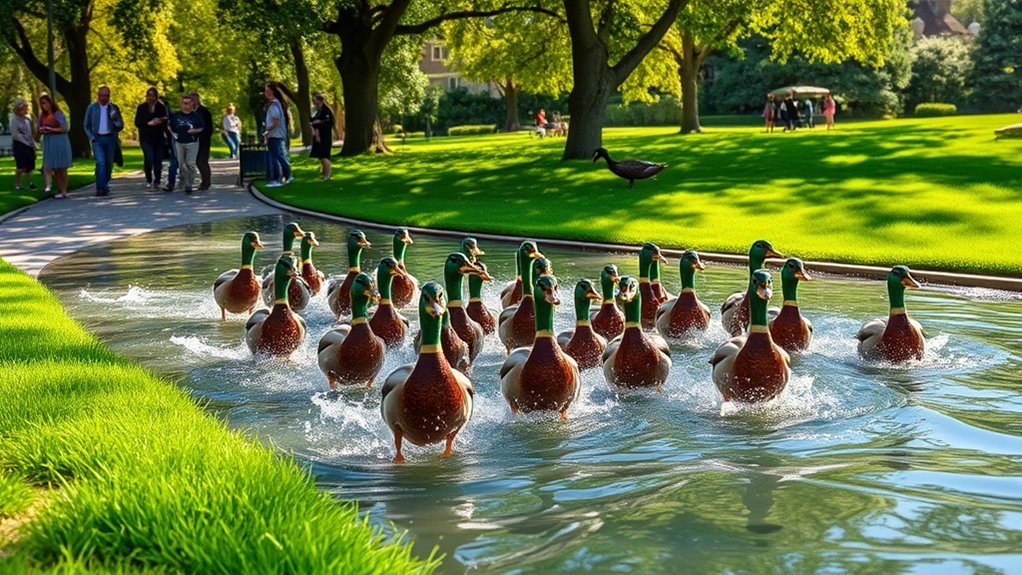
Have you heard of a "paddling" or a "team" of ducks? These fun names show how ducks gather together in their cute, quacky way.
Here are some quirky names you might like:
- Waddle – Imagine ducks walking side by side. It looks so cute!
- Raft – When ducks float together on water, they look like a colorful rainbow.
- Plump – A funny way to call them, reminding us of their round shapes.
- Dopping – This is when ducks dive in and splash around. It makes their get-togethers even more fun!
These silly names help us see how ducks enjoy being together.
Next time you see some ducks hanging out, try calling their group something special!
How Ducks Form Social Groups
Ducks aren't just lone travelers at lakes and ponds; they love hanging out in groups. These groups are important for building strong friendships. Ducks have a way of organizing themselves with clear roles. This system helps keep things in order.
Ducks talk to each other using different sounds, like quacks and whistles. They also use their bodies to show feelings and communicate. These signs help ducks understand each other and know where they fit in.
In these groups, some ducks take charge. They lead the flock when it's time to move or find food. This teamwork makes everyone feel safer and offers comfort.
Differences Between Domestic and Wild Duck Groups
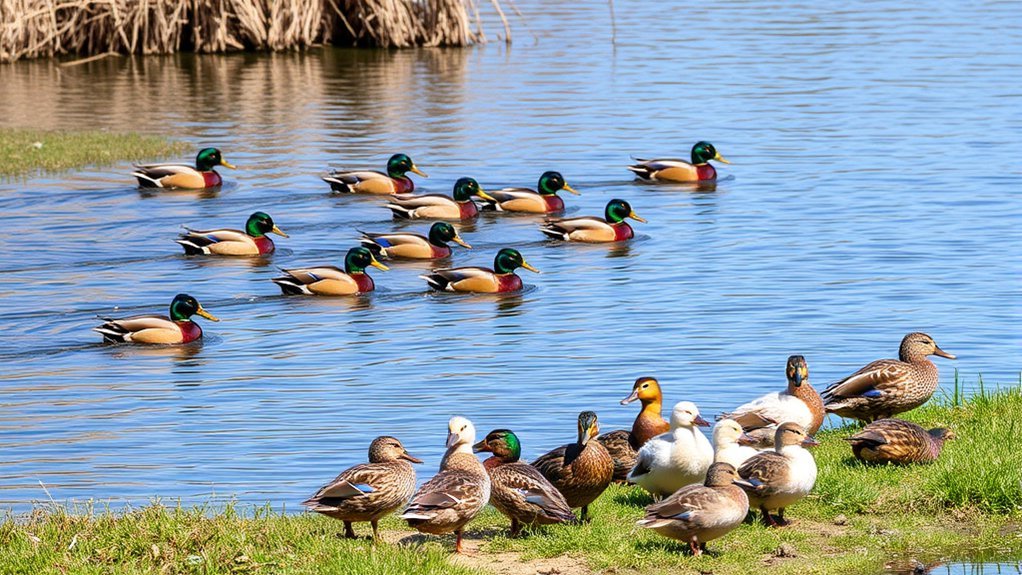
Ducks are social animals, but domestic ducks and wild ducks behave differently. Here are some easy-to-understand differences:
1. Group Dynamics: Domestic ducks like to stick together in close groups. They feel safe and comfortable that way.
Wild ducks, however, move around freely with others. They change their groups based on where they are.
2. Communication: Domestic ducks often quack loudly to chat and connect with each other.
Wild ducks use softer sounds to talk, so they can stay quiet and safe from danger.
3. Territoriality: Wild ducks claim areas as their own, especially during breeding season.
Domestic ducks don't mind sharing space and are less protective of their area.
4. Foraging: Wild ducks search for food in many places. They're good at finding what they need in nature.
Domestic ducks depend on people for food and often stay in familiar areas to eat.
These differences show how domestic and wild ducks live in different ways. Each group has its own special way of life that makes them unique.
The Role of Ducks in Ecosystems
Ducks are really important in nature! They help keep their homes healthy by eating water plants. This helps more plants grow and makes the area have more different kinds of life. When ducks search for food, they move around the dirt, which puts nutrients back into the water.
You can see how ducks help other birds interact and create friendships. Ducks also spread seeds, which helps new plants grow in different spots.
They're both food for other animals and hunters for small creatures, which helps keep balance in nature. So, the next time you see ducks, remember how much they help make nature better for everyone!
Fun Facts About Ducks and Their Behavior
Did you ever watch ducks waddle or glide on the water? They've some really interesting behaviors! Ducks are cute, and they've unique traits.
Here are some fun facts about them:
- How Ducks Talk: Ducks quack, but they don't just use sounds. They use body language too! This helps them share messages with each other.
- Duck Adventures: Many ducks travel long distances every year. They can fly thousands of miles! This shows how good they're at finding their way.
- Ducks Like Company: Ducks enjoy being with their friends. They form strong connections with other ducks and like to hang out in groups.
- What Ducks Eat: Ducks eat a variety of foods. They search for snacks in the water, dive underwater, and graze along the shore. This helps them survive easily in different places.
Now, next time you see ducks, you can share these fun facts with your friends!
Frequently Asked Questions
How Many Types of Ducks Are There Worldwide?
There are over 120 types of ducks around the world. They live in many places like lakes, rivers, and wetlands. Each type of duck has its own special colors and behaviors. This shows us the beauty of nature. Ducks are fun to see, and each one tells a different story. So, keep your eyes open and enjoy watching these amazing birds in their homes!
Can Ducks Recognize Individual Humans?
Ducks can recognize individual people, which is pretty cool! They remember your voice and how you look if you spend time with them. When you feed them or talk to them regularly, they build a connection with you. This helps create a special bond between you and these charming birds. It's fun to see how they respond to you in the park or by the pond!
What Do Ducks Eat in the Wild?
Ducks eat a variety of foods in the wild. They search for seeds, plants in the water, and tiny insects. This mix of food keeps them healthy and full of energy. Ducks are good at finding what they need in different places. They enjoy the gifts nature offers.
How Long Do Ducks Typically Live?
Ducks usually live between five and ten years. Their lifespan can change based on where they live and how they are cared for. Domestic ducks often live longer because they get good food and protection. This helps them stay healthy and happy.
Do Ducks Migrate, and if So, Where To?
Ducks migrate every year. In autumn, they fly south to find warmer places. In spring, they come back home.
Ducks choose their migration routes based on where they can find food and shelter. They look for wetlands, which are places like marshes and ponds. These areas have plenty of food for them to eat and places to stay safe.

Luna is the passionate founder and author of Birds and You, a website dedicated to sharing her love for birds with fellow enthusiasts. Through her engaging articles and guides, she aims to educate and inspire others to explore the fascinating world of birds. When she’s not writing, you can find Luna observing birds in their natural habitats or sharing beautiful bird photography on Pinterest. Join her on this journey to celebrate and protect our feathered friends!