

What Do You Call a Group of Flamingos?
Did you know that a group of flamingos is called a "flamboyance"? That name fits them well because of their bright pink color and lively nature. The word "flamengo" in Spanish means "flame-colored," which shows why these birds got such a fun name.
Flamingos like to be in groups, and this helps them survive. They find food and protect each other better when they are together. Plus, being in a group makes it easier for them to find mates.
These birds live in warm places, often near lakes or lagoons. Watching a flock of flamingos can be amazing! Their graceful movements and colorful feathers make them a joy to see. So next time you hear "flamboyance," think of these beautiful birds and their colorful, lively lives.
A Quick Overview
A group of flamingos is called a "flamboyance." This name fits because they are bright and colorful birds. Flamingos are very social and like to spend time together in their flamboyance.
Flamingos talk to each other with sounds and movements. They also do fun dances to impress each other and find mates. Watching a flamboyance of flamingos can make you appreciate how beautiful nature really is. It's amazing to see them all together, showing off their colors and enjoying each other's company!
The Unique Term for a Group of Flamingos

Flamingos are fascinating birds that don't just hang out anywhere. They meet up in a special group called a "flamboyance." This name shows off their bright colors and friendly ways.
Flamingos can talk to each other with sounds, body movements, and by moving together. This helps them feel like a team.
In a flamboyance, they also have special ways to find partners. They show off with dances and other fun displays. This helps them connect with their mate.
Being in a group helps flamingos nest together. When they all build their nests close, it keeps them safe from predators.
Watching how they communicate and work together gives us a glimpse of their strong friendships and community spirit. Flamingos truly are amazing birds living in vibrant groups!
The Origin of the Name
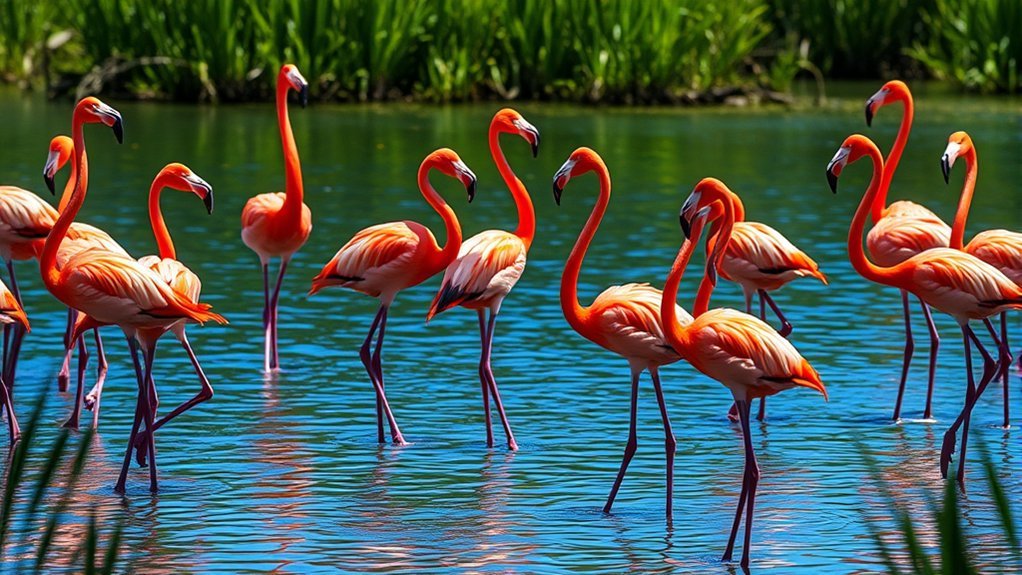
Flamboyance is the name we use for a group of flamingos. This name comes from the Spanish and Portuguese word "flamengo," which means "flame-colored." This is a great fit because flamingos are known for their pretty pink feathers. Their bright colors come from the food they eat, which is full of carotenoids.
When you see a flamboyance, it's more than just a bunch of birds together. It shows us how beautiful and social they are. Flamingos like to be around each other, and watching them can brighten our day.
This special name helps us appreciate their lively spirit. So, the next time you spot a group of flamingos, remember that you're seeing a vibrant community!
Understanding Flamingo Social Behavior

Flamingos are social birds that like to be together in large groups. They often gather in flocks, and this helps them form bonds and connect with each other. When flamingos move together, they show off their pretty feathers and dance. These actions help them strengthen their friendships and keep order in the group.
When it's time to find a mate, flamingos put on elaborate dances and make sounds to attract partners. This helps them find the right partner among many. Being social not only makes them feel connected but also increases their chances of having babies.
Other Collective Nouns for Birds
There are many fun terms for groups of birds. Each name shows something special about the birds' nature or behavior.
For example, a group of crows is called a "murder." This name reflects how people often view crows as spooky.
When you see a bunch of sparrows together, you can call them a "flight." This name highlights how sparrows are lively and social birds.
Different types of birds have their own unique names. For instance, a group of larks is called an "exaltation" because they sing happily.
Owls come together in a "parliament," which makes us think of wisdom.
Sparrows can also be called a "host" because they stick together as a community.
Learning these names can help you feel more connected to birds. It can make you notice their beauty and variety even more!
Fun Facts About Flamingos
Have you ever asked why flamingos are so bright pink? Their pink color comes from what they eat. They mainly eat algae and small sea animals called crustaceans, which have pigmented nutrients called carotenoids. These nutrients change their feathers from gray to pink. When flamingos want to find a mate, being brighter helps them attract a partner.
Here are some fun facts about flamingos:
- Flamingos like to be around other flamingos. They stay in big groups for safety.
- They've a special way of eating. They use their unique beaks to filter out food.
- Flamingos can stand on one leg. This helps them stay warm.
Flamingos are interesting birds. It's easy to see why we love them!
Flamingos in Different Cultures
Flamingos are interesting birds that many cultures admire. They often symbolize beauty, grace, and being special.
In many African traditions, flamingos stand for balance and harmony. Their smooth, synchronized movements show how beautiful nature can be.
In the Caribbean, people see flamingos as symbols of celebration and togetherness. Local stories often feature these birds, highlighting their fun and vibrant spirit.
Native American cultures also appreciate flamingos. They view them as a sign of water and renewal. This connection stresses the need to take care of our environment.
Today, flamingos inspire art and fashion. Their elegance reminds us of beauty in our lives.
Each culture gives flamingos a unique meaning, helping us connect with one another. By learning about these meanings, we can better understand and appreciate the world around us.
Conservation Status of Flamingos
Flamingos are beautiful birds loved by many people. However, their numbers are going down, which is a serious problem. Studies show that their decline is mainly due to habitat loss and climate change.
We can help protect flamingos by following these steps:
- Protect Their Homes: We need to keep wetlands safe because that's where flamingos live and breed.
- Study and Watch: We should keep an eye on how their populations change and how they reproduce. This information helps us know what actions to take.
- Get Involved: Let's work with local communities. When people in these areas help, we can create practices that protect flamingos while also supporting their lives.
The Importance of Flamingo Habitats
Flamingos need healthy homes to live and thrive. These beautiful birds rely on special places, like wetlands, where they can find food, raise their young, and socialize with each other.
Wetlands are important because they've shallow water. This water is where flamingos search for food like algae and tiny crustaceans. These areas also keep flamingo eggs safe from predators.
When we help protect and restore wetlands, we help flamingos and many other animals too. By taking part in wetland care, we make sure future generations can enjoy seeing flamingos in their natural homes.
Let's work together to keep these amazing birds' habitats safe!
How to Spot Flamingos in the Wild
If you want to see flamingos in the wild, look for places where they like to live. They usually hang out in coastal areas and wetlands.
Here are some simple tips to help you find them:
- Look for groups: Flamingos like to travel in flocks. If you see a bunch of them together, it's easier to recognize them.
- Watch how they feed: Flamingos have special curved beaks. You might spot them filtering water with their beaks, showing they're nearby.
- Listen for their sounds: Flamingos make loud honking noises. If you hear them from a distance, you can follow the sound to find them.
Visit lagoons, estuaries, and salt flats because these places are perfect for flamingos.
With a bit of patience and attention, you'll enjoy watching these beautiful birds in their natural homes. Happy birdwatching!
Frequently Asked Questions
What Colors Can Flamingos Be Besides Pink?
Flamingos are famous for their pink color, but they can also be other colors. You might see flamingos that are white, grey, or even orange. These colors come from the food they eat.
Flamingos get special pigments from their diet, which includes shrimp and algae. What they eat changes how they look. These colors can also affect how other flamingos see them and interact with them in their groups. So, the next time you see a flamingo, notice if it's a different color!
Do Flamingos Mate for Life?
Flamingos do not mate for life. However, they do build strong relationships. Each breeding season, many flamingos stay with the same partner. This helps them work well together to care for their chicks. These bonds bring comfort and support as they raise their young.
How Long Do Flamingos Live in the Wild?
In the wild, flamingos usually live between 20 and 30 years. Their lifespan depends mainly on how well they can find food, stay safe from predators, and adapt to their surroundings. These skills help them survive and live longer in nature.
Can Flamingos Swim?
Yes, flamingos can swim! These beautiful birds live in different places, like lakes and wetlands. They use their long legs to walk in shallow water and their webbed feet to paddle when swimming. This helps them find food and stay safe. Flamingos are really good at adapting to their environment!
What Do Flamingos Eat in Their Natural Habitat?
Flamingos eat a variety of foods. In their homes, they like to munch on small crustaceans, algae, and brine flies. These foods are full of carotenoids, which make flamingos their lovely pink color. Eating natural foods helps keep flamingos healthy and vibrant. Watching them enjoy their meals is always a delight!

Luna is the passionate founder and author of Birds and You, a website dedicated to sharing her love for birds with fellow enthusiasts. Through her engaging articles and guides, she aims to educate and inspire others to explore the fascinating world of birds. When she’s not writing, you can find Luna observing birds in their natural habitats or sharing beautiful bird photography on Pinterest. Join her on this journey to celebrate and protect our feathered friends!