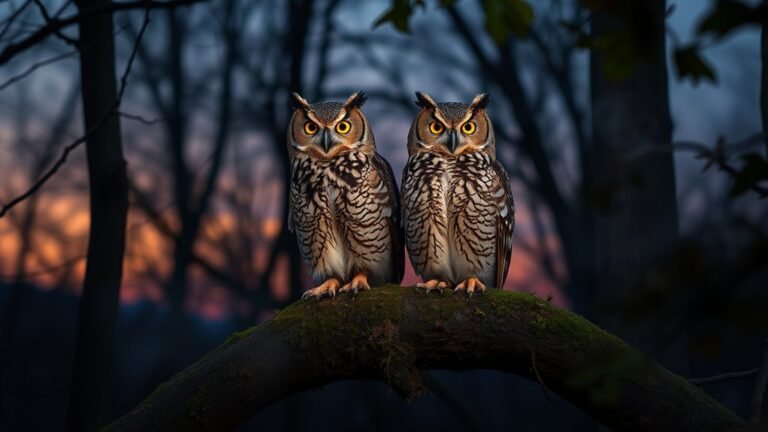
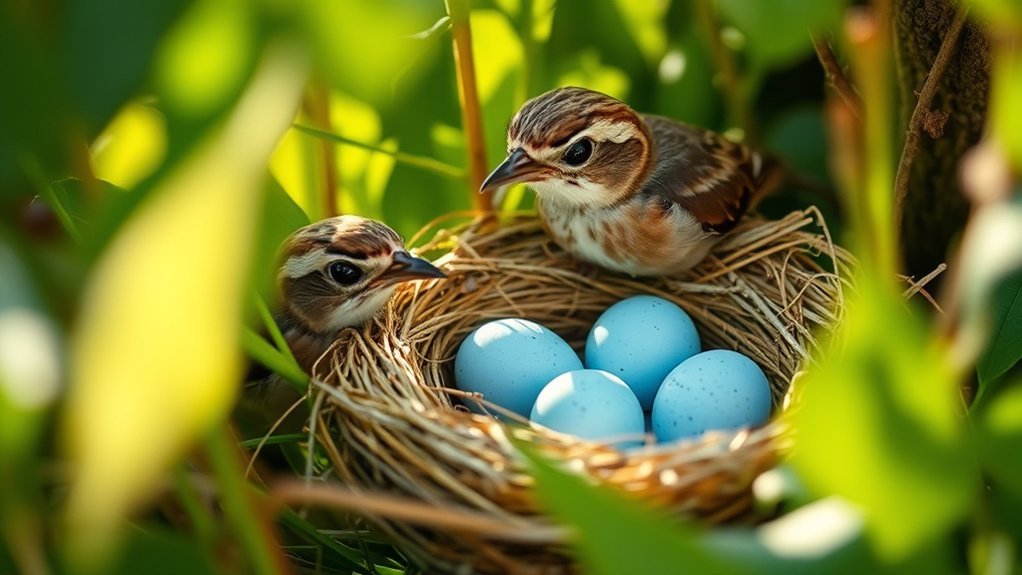
Which Bird Lays Blue Eggs? Discover the Facts
Have you ever thought about which birds lay blue eggs? Many birds do! Each bird species has its own way of nesting and living. The color of the eggs isn't just pretty. It helps with things like attracting mates and keeping the eggs safe.
Let's look at two examples: the American Robin and the Eastern Bluebird. Both of these birds lay beautiful blue eggs. The color helps camouflage the eggs in their nests, making it harder for predators to find them.
So, why are blue eggs important? They help the birds survive and reproduce. The stunning blue color plays a big role in their lives. Want to learn more about these birds? Keep reading!
A Quick Overview
Birds that lay blue eggs are interesting to learn about! Here are some facts:
- The American Robin lays three to five bright blue eggs. You can find their nests in bushes or trees.
- Eastern Bluebirds have eggs that can be light blue or deep turquoise. They like to nest in tree holes and often choose open fields or edges of forests.
- Barn Swallows also lay light blue eggs. They have different ways of building their nests, which makes them fun to watch.
Blue eggs help the chicks hide from predators. The color can show how healthy a mother bird is. This can affect how well she attracts a mate.
Birdwatching can be exciting when you look for these colorful eggs!
The Mystery of Blue Eggs in Nature
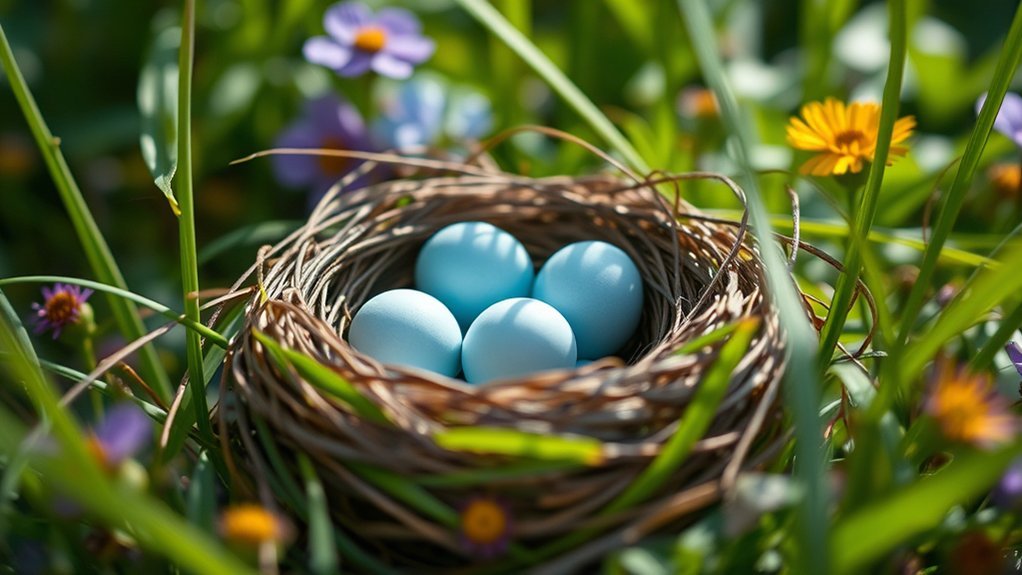
Many birds lay eggs in different colors, but blue eggs are extra special. They catch the eye of bird lovers and scientists. The blue color comes from a pigment called biliverdin. This nice hue helps the eggs blend in with their surroundings, which can keep them safe from predators. This is really important in places where nests need to be hidden well.
Also, some experts believe that blue eggs can show how healthy a mother bird is. A bright blue egg can signal to potential mates that the mother bird is strong and has good genes.
Common Birds With Blue Eggs
Birds are amazing creatures, and some of them lay beautiful blue eggs. Let's look at a few of these birds.
First, we've the Eastern Bluebird. This bird's eggs can be light blue or even a deep turquoise. Eastern Bluebirds are dedicated parents. They often build their nests in tree holes to keep their eggs safe.
Next is the American Robin. These birds are well-known for their bright blue eggs. They usually make nests in bushes or trees. Where they choose to place their nests can help them raise their young successfully.
Finally, there's the Barn Swallow. This bird flies acrobatically in the sky and lays light blue eggs. Barn Swallows have different nesting habits that help them adapt to their surroundings.
Each of these birds adds to the colorful variety of life in nature.
Isn't it fascinating to learn about their striking blue eggs?
The American Robin: A Classic Example
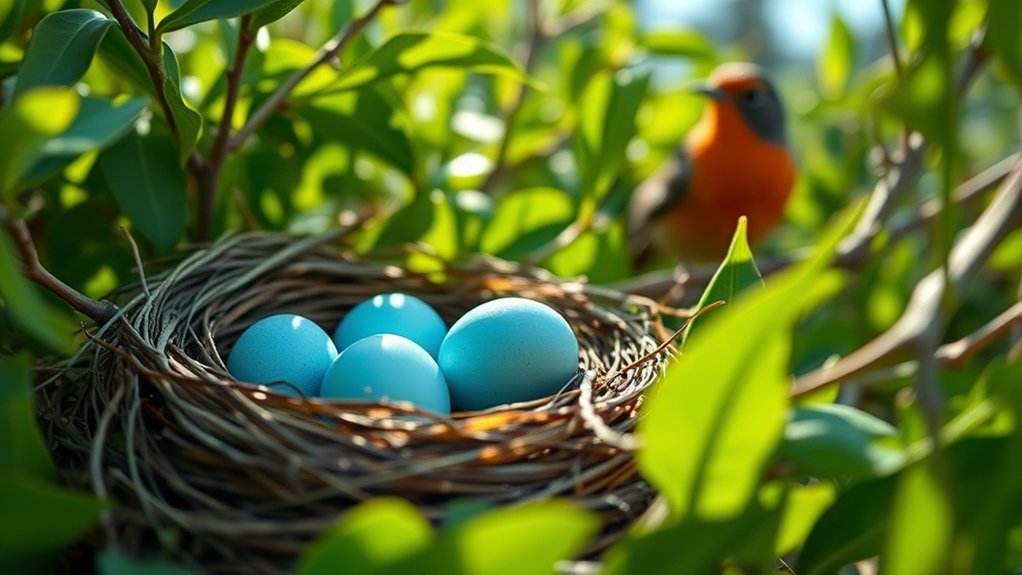
The American Robin is a perfect example of a bird that lays beautiful blue eggs. During the breeding season, robins are fun to watch. They build their nests in trees or bushes, choosing spots that keep their babies safe.
A female robin usually lays three to five eggs. After that, she sits on them to keep them warm for about 12 to 14 days.
While she incubates the eggs, she works hard. She only leaves the nest briefly to find food. This shows how much she cares for her chicks.
The bright blue color of the eggs and the mother robin's caring nature make the American Robin a special bird among those that lay blue eggs.
The Eastern Bluebird: Beauty and Color
The Eastern Bluebird is a beautiful bird. Its bright blue feathers and warm orange chest make it stand out. Many people love to watch these birds because they're so pretty. Their colors help them attract partners and protect their homes.
You can usually see Eastern Bluebirds in open fields, pastures, and near the edges of woods. They like places where they can sit high up and look for insects to eat.
In spring, their colors pop against flowers, making a lovely sight. Watching them in nature helps us feel connected to the environment and reminds us to appreciate wildlife.
The Eastern Bluebird shows us the beauty of nature and how strong it can be.
The Blue Jay: Intelligence and Nesting
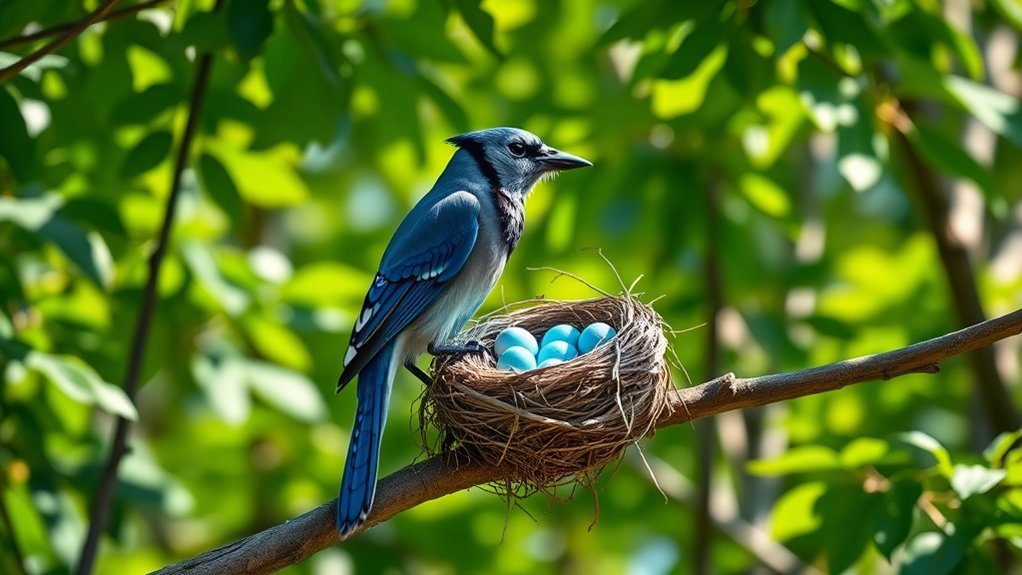
Blue Jays have beautiful blue and white feathers. They aren't just pretty but also very smart.
These birds understand their surroundings well. They're good at finding food and solving problems. You may hear them mimic different sounds, which helps them communicate with each other. This skill allows Blue Jays to live in many different areas and connect with other birds and people.
Their nests are interesting too. Blue Jays usually build their nests in thick bushes. They use various materials to make a safe home for their babies.
Watching these clever birds can show you how they behave and communicate, making them a wonder in the bird world.
The Barn Swallow: Masterful Builders
Barn Swallows are amazing builders. They don't just make nests for shelter; they create special homes that show off their skills.
These birds collect mud, straw, and feathers. Then, they carefully shape them into cup-like nests that stick to walls and ceilings. You'll often see these nests under roofs or bridges, where they find good spots to stay safe from danger and get food easily.
What's cool is that Barn Swallows use the same nests year after year. This shows how strong their community bonds are.
When you watch them work, you can see that making their nests isn't just about survival. It's also a big part of who they are.
The House Finch: Adaptable Nesters
House Finches are clever birds that can live in many different places. Unlike Barn Swallows, which build impressive nests, House Finches are great at finding spots to nest in cities. You might see them in hanging planters, on eaves, or even in mailboxes. This ability helps them fit right in with our lives, making them easy to spot.
House Finches love to visit yards and gardens. They aren't shy around people, which helps them find food easily. They collect items like string and paper to build their nests. Their nests are cozy and safe for their young.
Watching these birds can help you feel more connected to nature. House Finches remind us that even in busy cities, we can find beauty in wildlife.
The Mourning Dove: Gentle and Graceful
The Mourning Dove is a bird known for being gentle and graceful. It has a slender body and makes a soft cooing sound that many people find calming.
Mourning doves are often seen picking up seeds from the ground and they form strong pairs when they build nests.
These nests are usually simple. They're made with twigs and grass and are often found in shrubs or low trees. This shows how well they can adapt to their surroundings while staying safe.
Mourning doves have a short nesting period of just two weeks. This allows them to have several broods every year, which helps their young grow together.
Their soothing calls and peaceful nature make them a lovely sight in our backyards. Watching a Mourning Dove can bring a little calm to your day.
The Pacific Wren: Small but Mighty
The Pacific Wren is a small bird that can do big things.
Even though it's tiny, this bird lives well in its forest home. You can find the Pacific Wren in thick, dark areas of the woods. Its brown and gray feathers help it hide among the leaves and branches.
This little bird loves to search for food with lots of energy. When it sings during the breeding season, its beautiful song fills the forest.
Here are some fun facts about the Pacific Wren:
- It likes wet forests and thick bushes.
- It can build nests in many different ways.
- It often works with other wrens to stay together as a group.
The Pacific Wren shows us how small creatures can be strong and smart in their own special places!
Why Do Some Birds Lay Blue Eggs?
Have you ever thought about why some birds lay blue eggs? Let's break it down.
Birds use their egg colors to help keep their babies safe. Blue eggs can blend in better with certain environments. This camouflage helps protect the eggs from predators, meaning more baby birds can grow up.
Blue eggs may also help block harmful UV light. This extra protection could give the baby birds a better chance at survival.
Plus, some birds use blue eggs to show they're healthy. A bird with bright, blue eggs might look more attractive to potential mates.
The Role of Egg Color in Survival
Egg color is important for bird survival. It helps keep eggs safe from predators. When birds lay eggs that match the colors around them, the eggs blend in better. This makes it harder for animals that want to eat the eggs to find them.
- Camouflage: Egg colors that look like their surroundings help hidden nests.
- Color changes: Different birds have eggs that fit their living areas.
- Survival: Eggs that blend in well usually lead to more baby birds staying safe.
These changes show how animals adjust to stay alive. Knowing how this works helps us understand birds better and see how nature balances predators and prey.
Observing Blue Eggs in the Wild
Birds that lay blue eggs are fun to watch in nature. If you go outside, look for birds like American Robins and Eastern Bluebirds. Pay attention to how they build their nests.
See where they choose to make them and what materials they use. You can find their nests in your area. Just remember to be careful and respectful of nature.
When you see the eggs, look at their size, shape, and color. These details can show you about the bird's health and type. Writing down what you see helps other bird lovers.
It brings people together who care about wildlife. Enjoy watching these beautiful birds and their blue eggs!
Frequently Asked Questions
Are All Bird Eggs Blue or Just Specific Species?
Not all bird eggs are blue. Bird eggs come in many colors. Some birds lay blue eggs, but many others have eggs in different shades. The color of the eggs helps them adapt to their surroundings. For example, some eggs are brown or white. This variety shows how different birds have different ways of living.
Do Blue Eggs Have Different Nutritional Values Than Other Colors?
You're curious about egg color and nutrition. Blue eggs and other colored eggs usually have similar nutrition. The main differences come from what the hens eat and their living conditions. So, the color of the shell doesn't really change how healthy the egg is. Enjoy your eggs, no matter the color!
How Does Environmental Color Affect Egg Laying in Birds?
Environmental color can change how birds lay their eggs. Birds often match the color of their eggs to their surroundings. For example, in darker places, birds might lay darker eggs. This helps the eggs blend in and stay safe from predators. Blending in with the environment can help birds raise their young successfully.
Can Human Activities Influence the Color of Bird Eggs?
Yes, human activities can change the color of bird eggs. For example, pollution can affect how birds make the pigments that color their eggs. Also, when people change the materials used in nests, it can change how the eggs look. This shows that what we do can have a big effect on birds and their lives.
What Adaptations Help Birds Keep Blue Eggs Safe?
Birds keep their blue eggs safe in smart ways. They often find spots to build nests that match their surroundings. This helps hide the eggs from predators, or animals that might want to eat them.

Luna is the passionate founder and author of Birds and You, a website dedicated to sharing her love for birds with fellow enthusiasts. Through her engaging articles and guides, she aims to educate and inspire others to explore the fascinating world of birds. When she’s not writing, you can find Luna observing birds in their natural habitats or sharing beautiful bird photography on Pinterest. Join her on this journey to celebrate and protect our feathered friends!