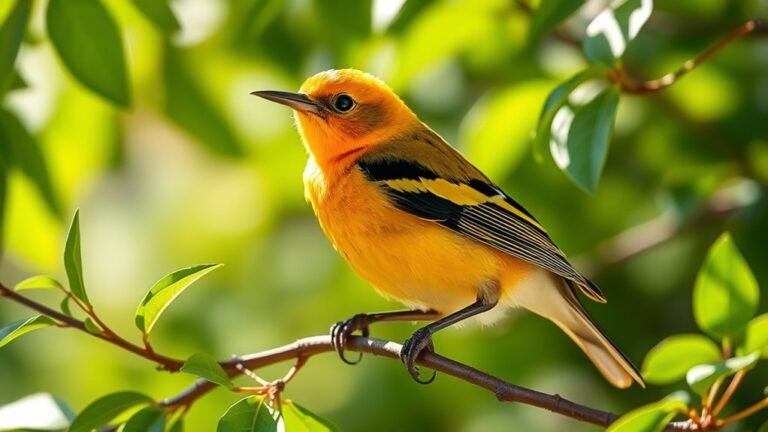
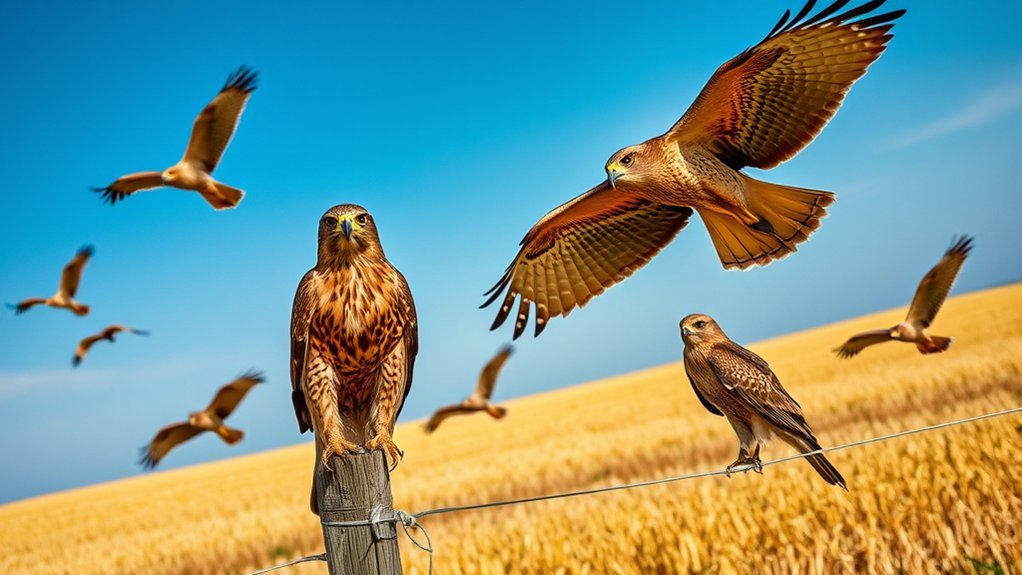
Hawks in Iowa: Identification and Behavior
In Iowa, you can spot hawks by looking for their special features and how they act. For example, the Red-tailed Hawk has striking brown and white feathers. The Cooper's Hawk, on the other hand, shows off a pretty gray-blue color. Each type of hawk hunts differently, depending on where they are and what animals they find nearby.
When you watch these birds closely, you can learn more about how they build their nests and adjust to different places. What interesting things will you notice next?
A Quick Overview
Iowa has at least seven types of hawks, including Red-tailed Hawks and Cooper's Hawks. Each type likes different kinds of homes.
Red-tailed Hawks are easy to spot because of their brown and white colors. They fly in smooth circles. Cooper's Hawks have gray-blue backs and red-brown stripes. They move quickly through trees to catch smaller birds.
When it comes to hunting, Red-tailed Hawks like to sit on branches and then swoop down to catch their food. In contrast, Cooper's Hawks zip around in woodlands.
Hawks build their nests in early spring. They choose tall trees and use twigs and grass to keep their babies safe.
If you want to see hawks, the best times are early morning or late afternoon. Bring along a local field guide and some binoculars for a better view. Happy birdwatching!
Overview of Hawk Species in Iowa
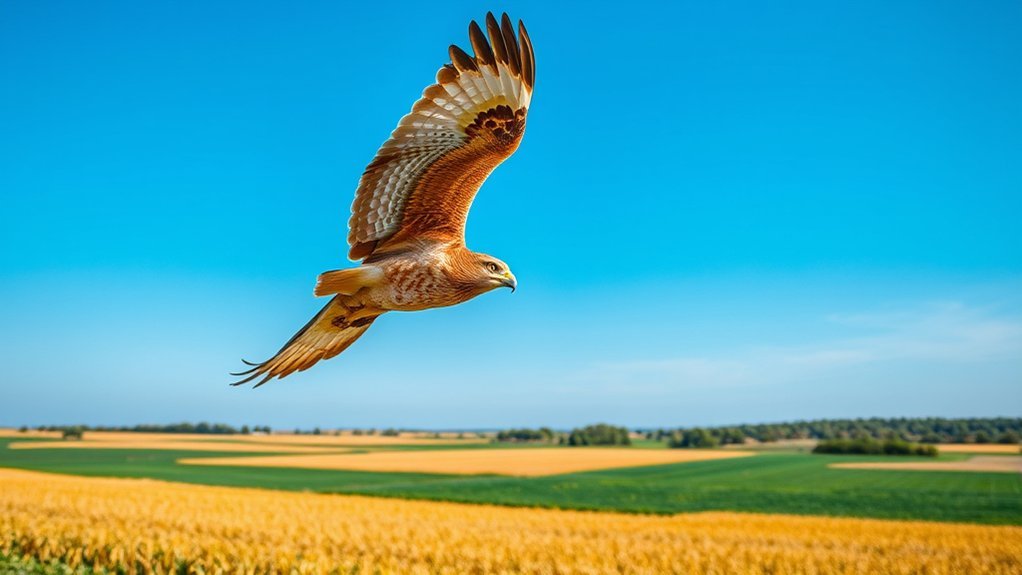
Iowa is home to at least seven types of hawks. These birds are different from each other in how they behave and where they like to live.
Red-tailed Hawks are often found in suburban areas. They like to nest in tall trees close to farms.
Cooper's Hawks prefer to hunt in thick forests. They're good at moving through the trees to catch smaller birds.
The Northern Goshawk likes larger woods and is known for being very protective of its space.
Broad-winged Hawks are often seen during migration and enjoy living in mature deciduous forests.
Each hawk species has special skills that help them survive and hunt.
Identifying Common Hawks: Key Characteristics

When you watch hawks in the wild, you'll see clear traits that help you tell them apart. First, look at their colors. For example, the Red-tailed Hawk has brown and white feathers that are mixed together, while the Cooper's Hawk has a unique gray-blue back with red-brown stripes below.
Next, pay attention to how they fly. The Red-tailed Hawk soars smoothly in big circles as it searches for food. In contrast, the Sharp-shinned Hawk flaps quickly through the trees.
Each hawk has special features that make it different. By improving your observing skills, you can enjoy seeing these amazing birds in Iowa.
Recognizing different hawks can be exciting and brings you closer to nature.
Hunting Strategies of Iowa Hawks
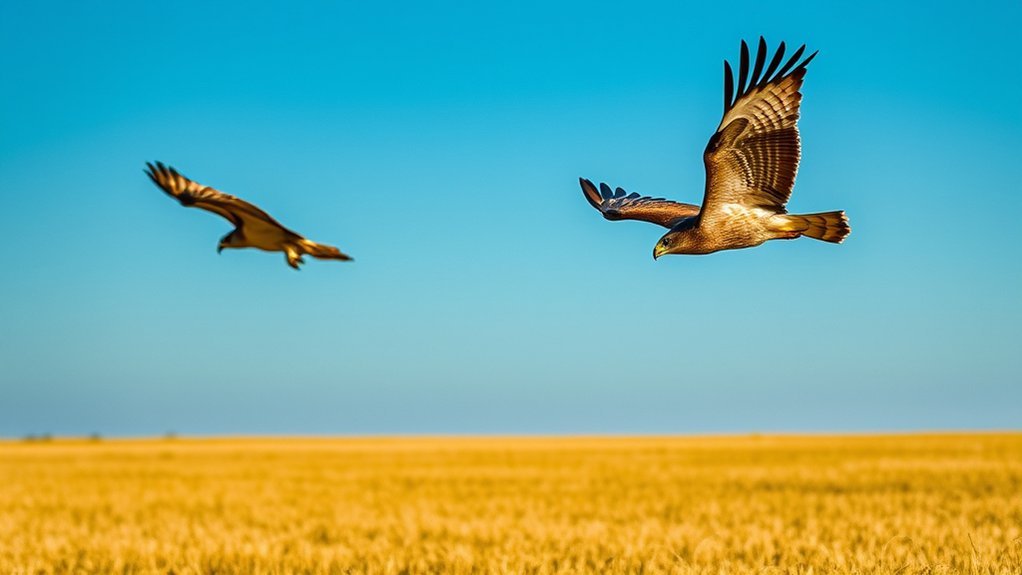
Hawks in Iowa have some cool ways of hunting that help them catch their food. They use different methods depending on where they are. Some hawks like to fly high above fields to look for small animals like mice. Others sneak around in bushes to surprise smaller birds.
For example, Red-tailed Hawks like to sit on trees or poles. They watch carefully and wait for the right moment to swoop down and grab their prey.
On the other hand, Cooper's Hawks are fast and agile. They dart through trees to catch their food.
What they eat also changes based on their environment. Bigger hawks hunt rabbits and squirrels in open spaces, while smaller hawks focus on catching songbirds and bugs in wooded areas.
Watching these hawks hunt helps us appreciate the variety of birds we've in Iowa and how they fit into their surroundings.
Nesting Habits and Reproductive Behavior
In the treetops of Iowa, hawks build their nests carefully. They choose spots that are high up and close to their food. During courtship, hawks perform aerial tricks to bond with their partners. This helps them prepare for having baby hawks.
Nesting happens in early spring. Here's how they do it:
- Choosing a Site: Hawks like to nest in strong trees that are high and near where they can catch food.
- Gathering Materials: They collect twigs, grasses, and leaves to make their nests strong and warm.
- Maintaining the Nest: Hawks often check and fix their nests during the breeding season to keep their future chicks safe and cozy.
This nesting behavior shows how hawks adapt to their environment. They use their skills and instincts to succeed in Iowa's lively landscapes.
Tips for Spotting Hawks in the Wild
Hawks are exciting birds to see in the sky, especially in Iowa. If you want to spot them, here are some helpful tips.
First, check out local field guides. These books can tell you about the types of hawks that live in Iowa.
Next, look for hawks in open spaces, like fields and along roads. They like to hunt for small animals and birds in these areas.
Watch how they fly. For example, red-tailed hawks often soar with their wings shaped like a V.
They're easier to spot in the early morning or late afternoon when they're most active.
Bring binoculars to get a better view. Be patient and take your time. Watching these amazing birds can be a fun and rewarding experience!
Frequently Asked Questions
What Time of Year Are Hawks Most Active in Iowa?
In spring, hawks become very busy with nesting. They work hard to find a safe place for their eggs. In the fall, hawks hunt more actively to gather food before winter. Watching these activities during spring and fall gives us a great chance to learn how hawks adapt and survive in Iowa. It's interesting to see how they change with the seasons!
How Can I Attract Hawks to My Backyard?
To attract hawks to your backyard, start by giving them good places to sit. You can use tall trees or make platforms for them to rest on. Make sure there are small animals nearby for the hawks to catch. These easy steps can help you see more hawks and enjoy nature in your backyard!
Are Hawks in Iowa Migratory or Resident Species?
Hawks in Iowa can be both migratory and resident birds. Some hawks, like the Red-tailed Hawk, stay in Iowa all year. Others move to different places with the changing seasons. This mix of birds makes the skies interesting. You can see different types of hawks depending on the time of year. So, whether you spot one soaring in the sky in summer or winter, there's always something to watch for!
What Threats Do Iowa Hawks Face in Their Habitat?
Iowa hawks face big problems that make it hard for them to live and find food. One major issue is habitat destruction. As towns and cities grow, the places where hawks hunt and make their homes get smaller. This means there are fewer animals for them to catch, which can hurt their chances of survival.
When hawks can't find enough food, other animals and plants in nature are also affected. This is not good for local ecosystems, which rely on a balance of different species. It's important for us to pay attention to these challenges. By protecting their homes and habitats, we can help Iowa hawks and keep nature healthy!
Can I Rehabilitate an Injured Hawk in Iowa?
You can't help an injured hawk in Iowa without the right permits. State laws say you need special training and a safe place to care for them. This helps make sure the hawk gets the care it needs and that you follow the rules. If you see an injured hawk, it's best to call a professional who can take care of it safely. Remember, wild birds need special attention!

Luna is the passionate founder and author of Birds and You, a website dedicated to sharing her love for birds with fellow enthusiasts. Through her engaging articles and guides, she aims to educate and inspire others to explore the fascinating world of birds. When she’s not writing, you can find Luna observing birds in their natural habitats or sharing beautiful bird photography on Pinterest. Join her on this journey to celebrate and protect our feathered friends!