The Fascinating World of Black Phoebes: A Birdwatcher’s Guide
As you learn about Black Phoebes, you'll see their shiny dark feathers and interesting behaviors. These birds are great at catching bugs in the air. They move quickly and skillfully. To spot them in different places, it's important to know what they look like and how they eat.
Black Phoebes also have cool ways of building their nests. They take care of their young together and have fun social lives. There's lots more to discover about how they live. Are you excited to learn more about these charming birds?
A Quick Overview
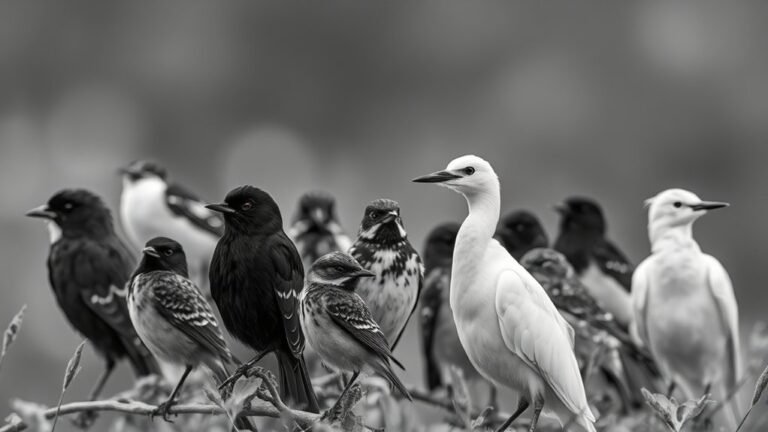
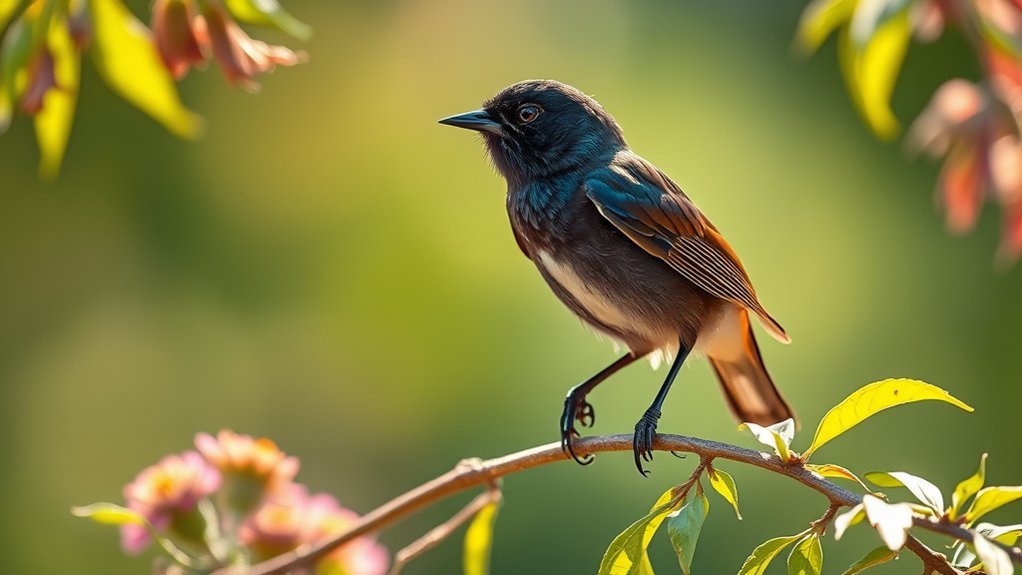
Black Phoebes are small birds, measuring about 6 to 7 inches long. They have nice dark feathers and a bright white belly, which makes them pretty to look at. Birdwatchers enjoy this colorful look.
These birds are great at hunting. They catch flying insects and also look for food on the ground. Watching them in action can be exciting for birdwatchers.
Black Phoebes like to live near water, such as in parks and gardens. They can also adapt to cities, so people can often see them in urban areas.
When it's time to breed, Black Phoebes find safe places to build their nests. Both parents take care of their eggs, which usually range from 2 to 5. This gives us interesting insights into their family life.
To help protect Black Phoebes, it's important to support local conservation efforts. Getting involved in these activities can play a key part in keeping their populations strong.
Overview of Black Phoebes

The Black Phoebe (Sayornis nigricans) is a small bird you can often see sitting on low branches or fence posts. Even though it may look plain, it plays an important role in nature.
During the breeding season, Black Phoebes build nests in safe spots, like under eaves of buildings or in thick bushes. This keeps their eggs safe from predators and bad weather. They usually lay two to five eggs. Both mom and dad help take care of the eggs, keeping them warm and feeding the baby birds after they hatch.
These birds can live in many different places, and they need lots of insects to eat. Because of this, seeing Black Phoebes can tell us a lot about the health of the environment.
Watching how they behave can help you appreciate these simple but important birds in nature.
Physical Characteristics
When you see a Black Phoebe, its look is really eye-catching. It has smooth, dark feathers and a bright white belly. This makes it stand out. Take a look at its wings and tail; they've special feather patterns that add to its beauty.
Adult Black Phoebes usually measure about 6 to 7 inches long.
- It has a short, pointed tail that it often wags while sitting.
- Its body is slim, which helps it fly swiftly.
- Its bright, lively eyes make it even more appealing.
These features make the Black Phoebe not just beautiful but also fun to watch for bird lovers. It truly connects you with nature!
Behavior and Feeding Habits

The Black Phoebe is a cool bird with a special look and interesting habits. It zips around, quickly stopping to catch bugs in the air or on the ground. This bird mostly eats flying insects and shows great skill when hunting.
Even though Black Phoebes like to be alone most of the time, you might see them hang out in small groups during migration. They talk to each other using different calls and body movements, which makes them fun to watch.
Learning about how Black Phoebes act can make your birdwatching even more enjoyable, helping you connect with these amazing birds as they go about their day.
Habitat and Distribution
Black Phoebes like to live where there are good spots to sit and water nearby. They're flexible birds and enjoy open areas, so you can often find them in cities too.
They build their nests in safe places close to streams or rivers, which helps them during migration.
- Black Phoebes often stay in dry or partly dry areas.
- You can see them in parks, gardens, and along rivers.
- When it's time to migrate, they move to lower places for more food.
Knowing where these birds like to live can make your birdwatching more fun.
It helps you connect with these interesting creatures.
Vocalizations and Communication
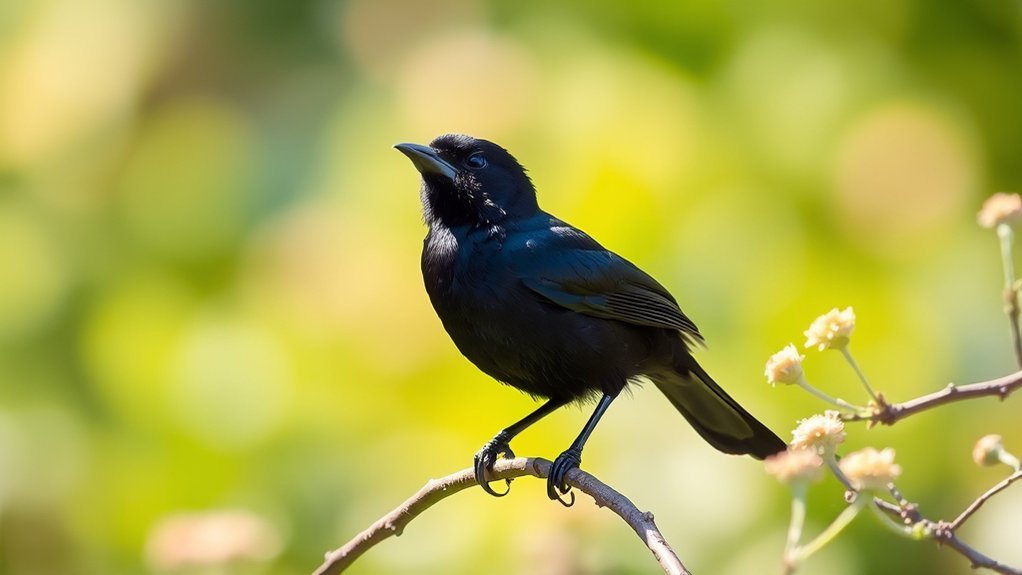
Black Phoebes are interesting birds, and their sounds are a big part of how they act and talk to each other. These birds make a variety of songs that can sound different depending on where they're or what time of year it is.
When male Black Phoebes want to attract a mate or mark their territory, they sing lovely and rhythmic calls. They also change their sounds and tones to show different feelings or to warn other birds about dangers like predators.
If you listen carefully, you can pick up on these small differences in their calls.
Understanding their vocalizations can make birdwatching even more fun. It helps you feel closer to these amazing creatures and connects you to others who enjoy watching birds.
Tips for Spotting Black Phoebes
Spotting Black Phoebes can be tricky, but you can improve your chances with some simple tips. Here's what you need to know:
- Location: Look for them near water, in open fields, or along edges of different habitats. They like to perch in these spots.
- Timing: The best times to see them are early in the morning or late in the afternoon. They're most active then, flying around to catch insects.
- Behavior: Watch for their special dipping motion. They hover and then jump to catch their food.
Using these tips will help you find Black Phoebes more easily.
Happy birdwatching!
Conservation Status and Efforts
While you're out looking for Black Phoebes, you should know about their conservation status and how we can help them.
These birds face problems mainly because their homes are being lost. Urban areas and farms take away the places where they live and find food.
To help, many groups work to protect their habitats. They focus on keeping riparian areas and wetlands safe. You can join in the effort by supporting local conservation groups.
These groups raise awareness and help restore habitats.
It's also important to keep track of Black Phoebe populations. You can take part in citizen science projects to help monitor them.
Getting involved not only helps Black Phoebes but also connects you with other people who love birds and care about nature. Together, we can make a positive change for these beautiful birds.
Frequently Asked Questions
What Are the Best Times of Year to Observe Black Phoebes?
If you want to see black phoebes, the best time is during their breeding season. This usually happens in spring and early summer. During this time, you are more likely to spot them as they are more active.
Pay attention to the weather, too. If it rains less, there will be more insects around. Since black phoebes eat insects, this can make it easier to see them hunting for food. So, plan your bird-watching trips when the weather is nice and dry!
How Do Black Phoebes Adapt to Urban Environments?
Black phoebes do well in cities. They like to build their nests on building eaves. This helps them stay safe and close to food.
In urban areas, they find plenty of insects around streetlights. This gives them lots of food options. You can see these birds easily as they fly around, showing how they adapt to city life. They are a great example of how animals can thrive in new places.
Are Black Phoebes Social Birds or Solitary?
Black phoebes are mostly social birds when it comes to nesting. They often build nests close to their neighbors. This helps them connect and share their space. However, when they hunt for food, they usually do it alone. So, they like being near each other during nesting, but they often prefer to be on their own when looking for meals.
What Is the Lifespan of a Black Phoebe?
The black phoebe usually lives between 3 to 5 years. Their life can be longer or shorter based on where they live and what they eat. When they have a safe place to nest and plenty of food, they tend to do better and live longer.
Do Black Phoebes Migrate, or Are They Year-Round Residents?
Black phoebes mostly stay in one place all year. They like areas where there is a lot of water. They set up their homes in spots that help them raise their young. By staying in good places, they can find food and keep safe. This helps them live and grow their families.

Luna is the passionate founder and author of Birds and You, a website dedicated to sharing her love for birds with fellow enthusiasts. Through her engaging articles and guides, she aims to educate and inspire others to explore the fascinating world of birds. When she’s not writing, you can find Luna observing birds in their natural habitats or sharing beautiful bird photography on Pinterest. Join her on this journey to celebrate and protect our feathered friends!