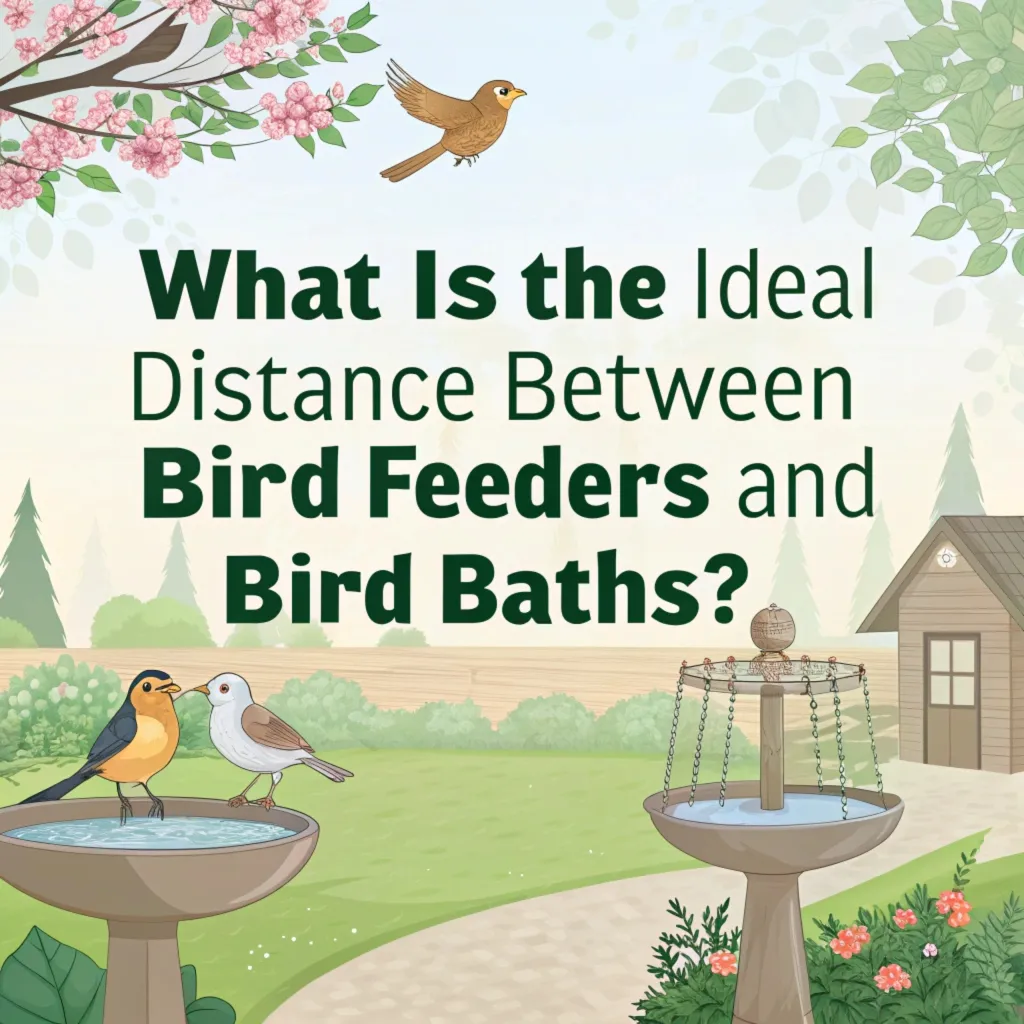
What is the Ideal Distance Between Bird Feeders and Bird Baths?
Creating an inviting environment for birds in your garden involves careful planning and placement of essential elements like bird feeders and bird baths.
One crucial aspect to consider is the ideal distance between these two features.
This guide will explore the optimal spacing to ensure bird safety, cleanliness, and overall enjoyment for both birds and bird watchers.
Key Takeaways
- Minimum distance: Keep bird baths at least 10 feet away from feeders
- Maximum distance: Some experts recommend up to 30 feet of separation
- Cleanliness: Proper spacing prevents seed contamination and droppings in water
- Bird safety: Distance reduces risk of predators and collisions
- Visibility: Ensure both features are visible to birds and observers
- Water quality: Proper placement helps maintain clean, fresh water
- Accessibility: Consider proximity to water sources for easy maintenance
- Shelter: Position near cover for bird security
- Sun exposure: Balance shade and sunlight for optimal conditions
- Multiple options: Consider using several bird baths at different locations
The Importance of Proper Spacing
Maintaining an appropriate distance between bird feeders and bird baths is crucial for several reasons:
Bird health: Proper spacing helps prevent the spread of diseases and parasites among birds. When feeders and baths are too close, droppings and contaminated food can easily enter the water, creating a breeding ground for harmful bacteria.
Water quality: Keeping bird baths away from feeders ensures cleaner water. Seeds and hulls from nearby feeders can quickly dirty the water, making it less appealing and potentially harmful to birds.
Bird safety: Adequate distance between feeders and baths reduces the risk of predators ambushing birds while they bathe or drink. It also minimizes the chances of window collisions if the features are near buildings.
Attracting diverse species: Different bird species have varying preferences for feeding and bathing locations. Spacing these features apart can attract a wider variety of birds to your garden.
Proper spacing between bird feeders and bird baths not only promotes bird health and safety but also enhances the overall bird-watching experience.
By creating distinct zones for feeding and bathing, you encourage birds to spend more time in your garden, allowing for better observation and enjoyment of their natural behaviors.
Consider the natural behavior of birds when planning your garden layout. Some species prefer to feed in open areas, while others feel more comfortable near cover.
By providing a range of options, you’ll create a more diverse and vibrant bird habitat.
Recommended Distances
Experts suggest varying distances for optimal placement of bird baths in relation to feeders:
Minimum distance: Place bird baths at least 10 feet away from feeders. This distance helps prevent seed contamination and reduces the likelihood of droppings entering the water.
Maximum distance: Some bird experts recommend up to 30 feet of separation between feeders and baths. This larger gap further enhances bird safety and water cleanliness.
Balanced approach: A distance of 15 to 20 feet often provides a good compromise, allowing birds to move easily between feeding and bathing areas while maintaining cleanliness and safety.
When determining the ideal distance between bird feeders and bird baths, consider the size of your garden and the natural landscape features.
If you have a larger space, you may be able to create multiple feeding and bathing stations at varying distances, providing birds with more options and reducing competition.
Experiment with different distances and observe bird behavior to find the optimal arrangement for your specific garden.
You may find that certain species prefer closer or farther spacing between feeders and baths.
Factors to Consider When Placing Bird Baths
Visibility: Position bird baths where they are easily visible to birds and observers. This encourages bird visits and enhances birdwatching experiences.
Accessibility: Place baths near a water source for easy filling and cleaning. Regular maintenance is essential for bird health and continued visits.
Shelter: Locate bird baths near bushes or trees that provide cover and quick escape routes for birds. This increases their sense of security while bathing or drinking.
Sun exposure: Balance shade and sunlight to maintain comfortable water temperatures and reduce algae growth. Partial shade often works best, especially in warmer climates.
Multiple options: Consider installing several bird baths at different locations in your garden. This provides more opportunities for birds to access water and can attract a wider variety of species.
When placing bird baths, consider the natural topography of your garden. Birds are often attracted to areas with slight elevations, as these provide better visibility and a sense of security.
If possible, position your bird bath on a gentle slope or raised area to mimic their preferred natural bathing spots.
Pay attention to the surrounding vegetation when placing bird baths.
Native plants not only provide shelter but also attract insects, which can serve as an additional food source for birds visiting your garden.
Maintaining Clean and Safe Bird Baths
Regular cleaning: Clean bird baths every few weeks using a mixture of water and vinegar or a mild, bird-safe detergent. Scrub thoroughly to remove algae and debris.
Fresh water: Change the water in bird baths daily or every other day to ensure cleanliness and prevent mosquito breeding.
Depth: Keep water depth shallow, around 1 to 2 inches, to accommodate various bird sizes and prevent drowning risks.
Winter care: In colder regions, use heated bird baths or add a water heater to prevent freezing during winter months.
Maintaining clean and safe bird baths is crucial for the health of your feathered visitors.
Consider adding a water agitator or small fountain to your bird bath, as moving water not only attracts more birds but also helps prevent the growth of harmful bacteria and algae.
In addition to regular cleaning, inspect your bird bath for any cracks or damage that could pose a risk to birds. Replace or repair damaged baths promptly to ensure a safe bathing environment.
Complementary Features for Bird-Friendly Gardens
Native plants: Incorporate native plants in your garden to provide natural food sources and shelter for birds.
Perches: Add branches or small logs near bird baths to serve as perches for birds to rest and preen after bathing.
Moving water: Consider adding a dripper or small fountain to your bird bath. The sound of moving water attracts more birds and helps keep the water fresh.
Creating a bird-friendly garden goes beyond just providing food and water. Consider adding nesting boxes or platforms to encourage birds to make your garden their home.
Different species prefer different types of nesting sites, so research the common birds in your area and provide appropriate options.
Incorporate a variety of textures and heights in your garden landscape. This not only adds visual interest but also creates diverse habitats that appeal to different bird species.
From ground cover to tall trees, each layer provides unique opportunities for birds to feed, nest, and seek shelter.
Conclusion
The ideal distance between bird feeders and bird baths is crucial for creating a safe, clean, and inviting environment for our feathered friends.
By maintaining a minimum distance of 10 feet, with some experts recommending up to 30 feet, you can ensure bird health, water quality, and overall enjoyment for both birds and bird watchers. Remember to consider factors such as visibility, accessibility, and shelter when placing your bird bath.
With proper spacing and maintenance, your garden will become a haven for a diverse array of bird species, providing endless opportunities for observation and appreciation of these beautiful creatures.
Creating an ideal environment for birds requires ongoing observation and adaptation. As you implement these recommendations, take time to observe the birds visiting your garden.
Note which species are attracted to your feeders and baths, and how they interact with the space. This information can help you fine-tune your garden layout over time, creating an even more inviting habitat for your feathered visitors.
Remember that your bird-friendly garden is not just a source of enjoyment for you, but also a vital resource for local bird populations.
By providing a safe and nurturing environment, you’re contributing to bird conservation efforts in your area.
FAQs
How often should I clean my bird bath?
Clean your bird bath every few weeks using a mixture of water and vinegar or a mild, bird-safe detergent. Scrub thoroughly to remove algae and debris.
Can I place my bird bath under a tree?
While placing a bird bath near trees provides shelter, avoid positioning it directly under trees that shed a lot of leaves or fruits to prevent debris from contaminating the water.
What is the best material for a bird bath?
Durable materials like concrete, ceramic, or metal work well for bird baths. Ensure the surface is rough enough for birds to grip securely.
How deep should the water be in a bird bath?
Keep the water depth shallow, around 1 to 2 inches, to accommodate various bird sizes and prevent drowning risks.
Should I add anything to the water in my bird bath?
It’s best to use clean, fresh water without additives. However, you can add a small amount of apple cider vinegar to help prevent algae growth.

Luna is the passionate founder and author of Birds and You, a website dedicated to sharing her love for birds with fellow enthusiasts. Through her engaging articles and guides, she aims to educate and inspire others to explore the fascinating world of birds. When she’s not writing, you can find Luna observing birds in their natural habitats or sharing beautiful bird photography on Pinterest. Join her on this journey to celebrate and protect our feathered friends!